
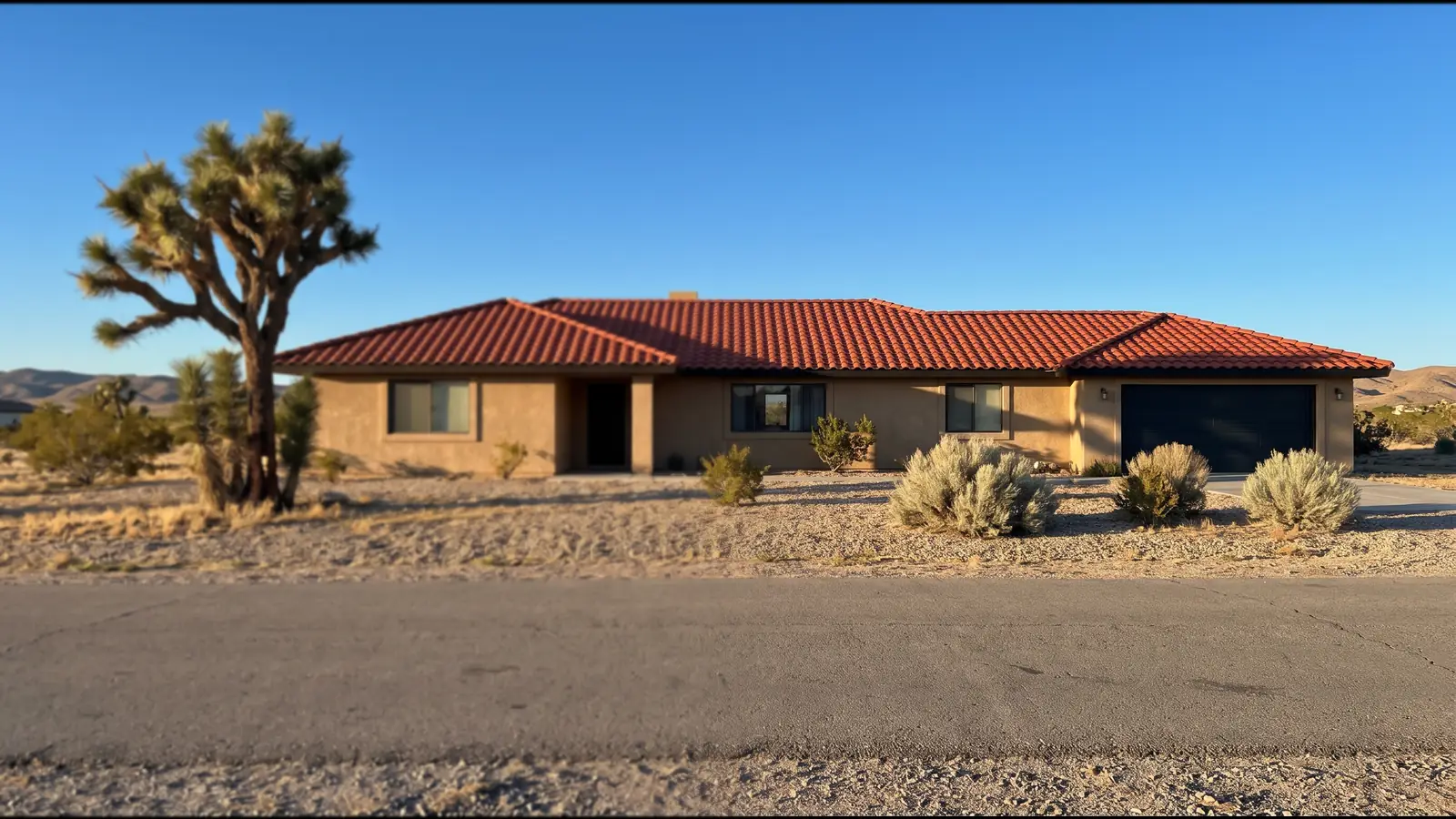
Wind-Damaged Tile Roof Repair Types in Hesperia
The National Weather Service office in San Diego issues wind advisories for the Apple and Lucerne Valleys forecast zone, which includes Hesperia. After one, these are the repairs that come up.
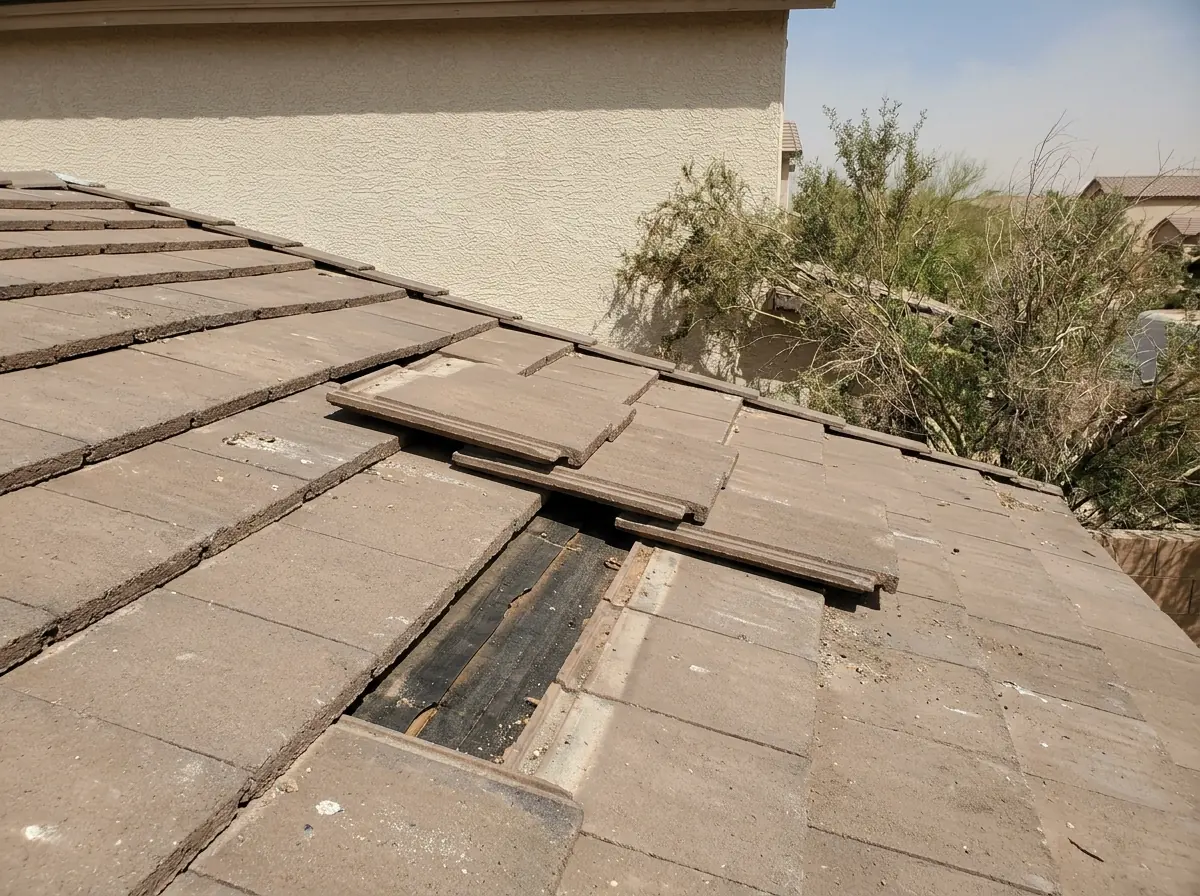
Lifted and Displaced Field Tile
Field tile is everything away from the edges. When wind gets under a course, tiles can lift, shift sideways or slide down onto the row below, breaking their interlock. Ones that slid but didn't break can often be reset and fastened. Ones that cracked or lost a corner are replaced, since code won't allow a cracked tile back on the roof. The felt under a displaced tile has been open to the weather, so ask the roofer to look at it before the tile goes back.
Blown-Off Ridge and Rake Tiles
The code singles out the edges. The 2025 California Residential Code defines a perimeter zone of three tile courses, and never less than 36 inches, along each side of every hip and ridge and along the eaves and gable rakes. Every tile in that zone needs at least one fastener. Ridge caps that blew off can point to failed mortar or a rotted nailer board. Those are covered on tile roof ridge and hip repair.
Clip and Fastener Upgrades for High Wind
The industry installation manual names the parts that hold tile against wind. Nose clips (also called wind clips or tile locks) hold the bottom edge of a tile against uplift. Side clips stop interlocking tiles from rotating. In areas a building official designates for high wind, the manual calls for:
- The head of every tile fastened
- Clips on the nose of every eave-course tile
- Two fasteners on rake tiles where code requires them
- Ridge, hip and rake noses set in roofers' mastic
Whether your address falls in a designated area is a question for the roofer or the city. Where tiles keep lifting in the same spot, clips there are a reasonable upgrade to ask about.
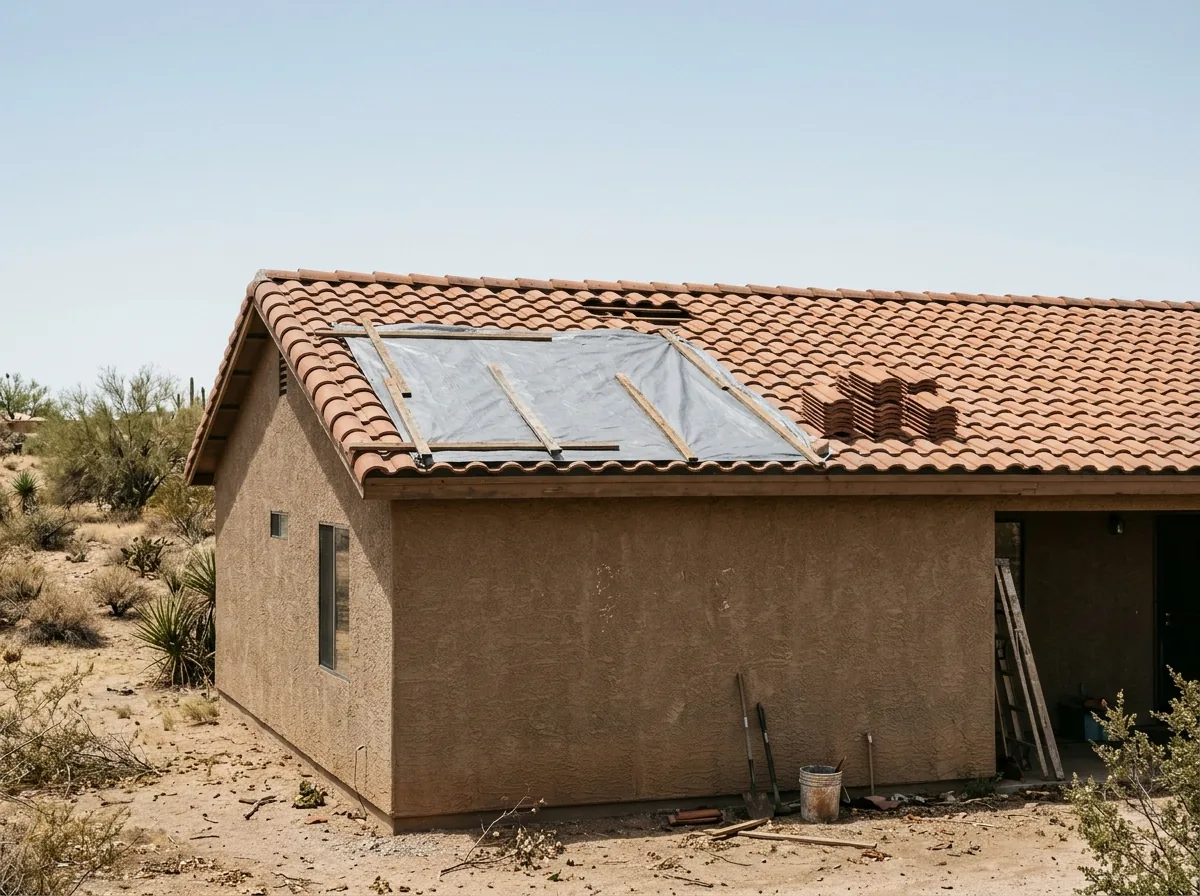
Temporary Dry-In After a Wind Event
When tiles are gone and rain is due, the first job is covering the open felt. California's Department of Insurance calls temporary repairs one of the most important steps after a loss. It also warns that policies may not cover further damage if reasonable steps weren't taken. Cost guides put an emergency tarp at $1.00 to $2.80 a square foot. That usually covers a damage check, debris removal, photos for insurance and an estimate, and some roofers waive the tarp fee if they get the repair. The insurance department also warns against contractors who push large spending on temporary work.
Photo Documentation for an Insurance Claim
Before anything is reset, ask the roofer for dated photos of each damaged area, close and wide. The state's claims guide tells homeowners to list structural damage for the adjuster, naming missing roof tiles. It also asks for written bids from licensed contractors with materials and prices listed line by line. Keep receipts for any materials you buy for a temporary fix. Don't approve major permanent repairs until the adjuster has seen the roof.
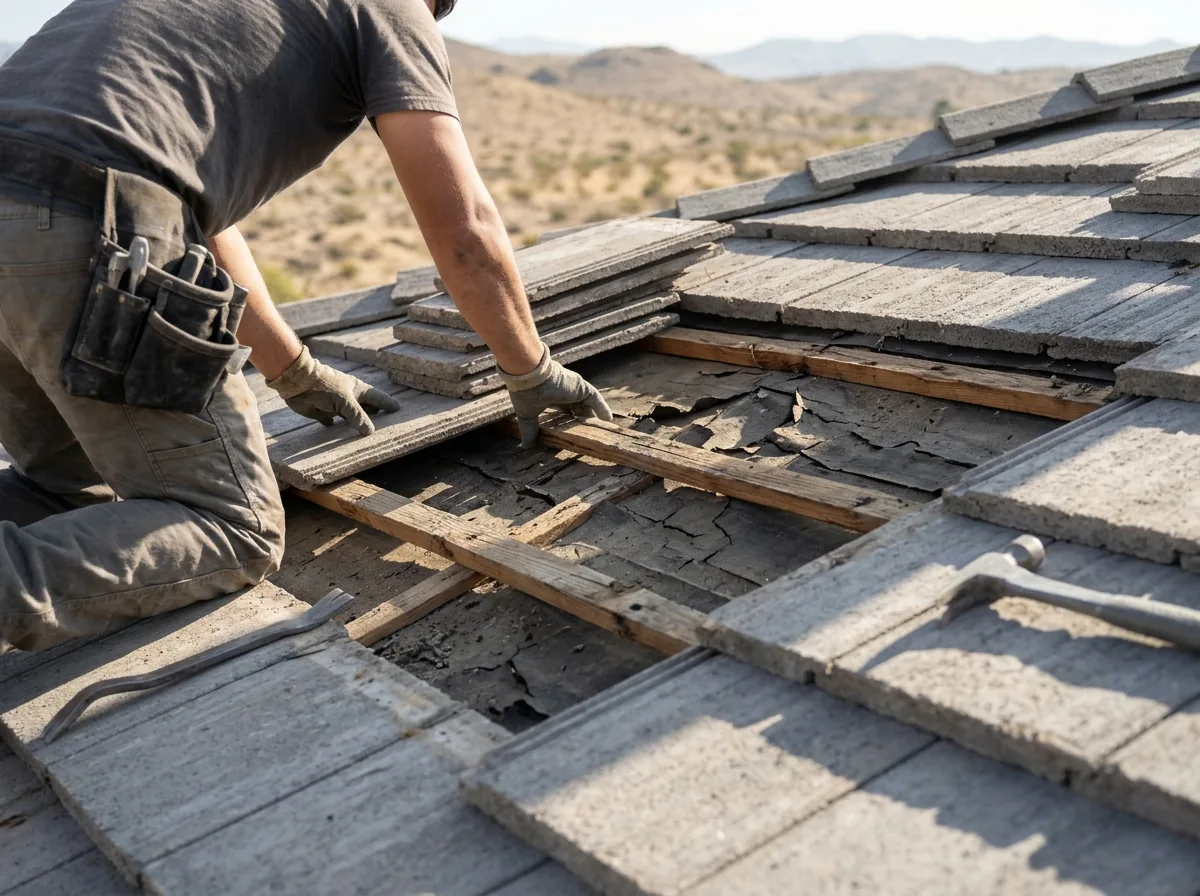
Why Hesperia homeowners call Hesperia Tile Roofing
- Asking for a quote is free and you're under no obligation
- Each request goes to a single tile roofer, not sold to a list
- Ask that tear-off, felt, deck allowance and permit sit on one written price
- You never pay for the referral
After a Hesperia Windstorm: What to Do in Order
STEP 01
Look from the ground
Count the visible gaps, slid courses and missing ridge caps from the yard, and photograph them. Stay off the roof: tile breaks under the wrong step.
STEP 02
Get the open spots covered
Call for a tarp if rain is forecast or felt is visible. Save receipts.
STEP 03
Report the claim
If you plan to claim, call your insurer before permanent work starts, and share the roofer's photos.
STEP 04
Repair and re-fasten
Once the adjuster has seen it, the roofer resets or replaces tile, refastens the perimeter and trim, and replaces any felt the weather has reached. For the cost of single broken tiles and how matching works, see cracked roof tile repair.