
Tile Roof Underlayment Types and Lift-and-Relay Work in Hesperia
On a clay or concrete tile roof, the underlayment and flashing keep the water out. The tile shades them and sheds most of the rain. Once the felt dries out and splits, the roof leaks even with every tile in place. What goes back under the tile is the main decision in this job.
Two-ply No. 30 felt
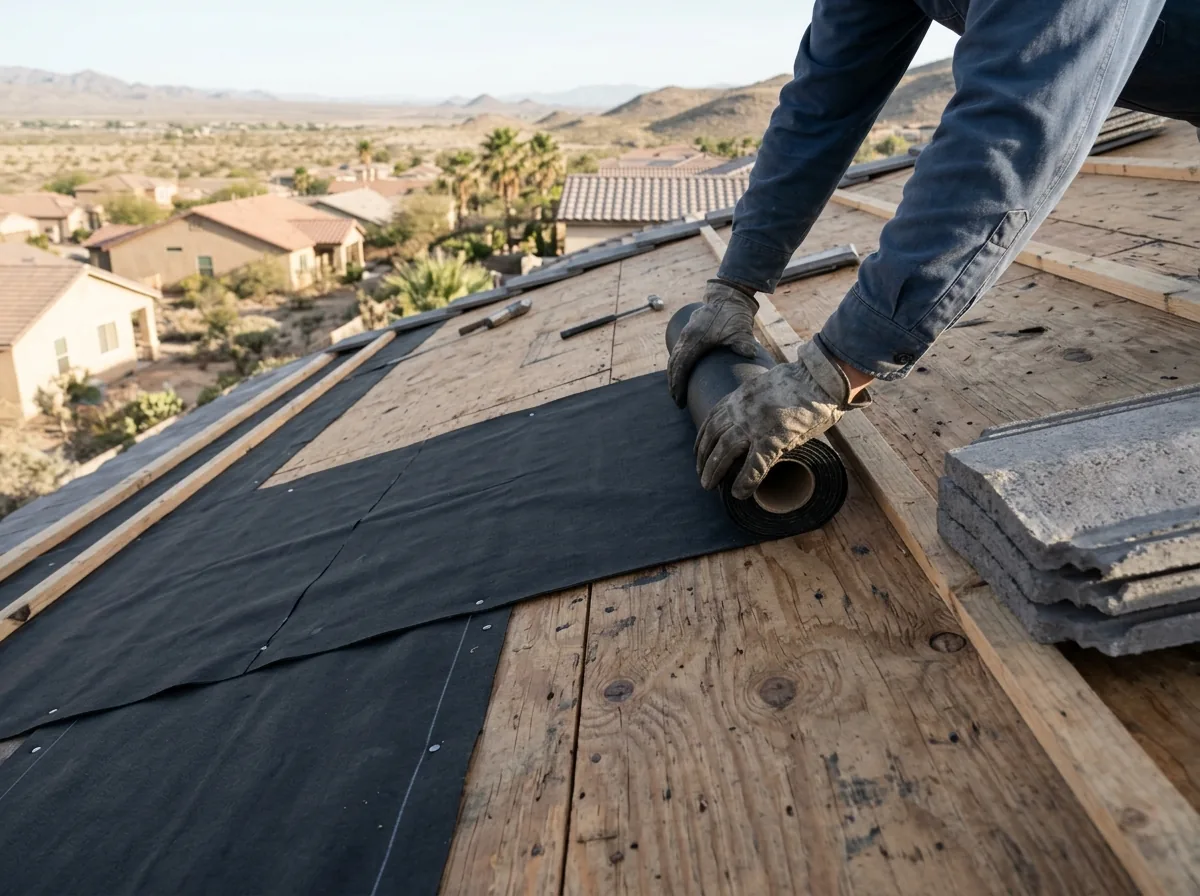
The code lists ASTM D226 Type II for tile, which is the felt the trade calls No. 30. Two layers are required on roofs between 2½:12 and 4:12; above 4:12 one layer lapped 2 inches meets code. Felt is the cheapest option, at about $0.05 to $0.15 per sq ft for the material in HomeGuide's figures. Some roofers quote a heavier felt. Ask for the product name and the standard it meets.
Synthetic underlayment
Synthetic sheets (ASTM D8257, a mechanically fastened polymer underlayment) cost a bit more, about $0.10 to $0.35 per sq ft for the material. The JLC field guide says they last longer, weigh less and shed water better than felt. That matters in a place with roughly 108 days a year at 90°F or above, when the underlayment beneath the tile bakes every afternoon. Ask for a synthetic that the tile maker lists as suitable for use under tile.
Self-adhered (peel-and-stick) at valleys and eaves
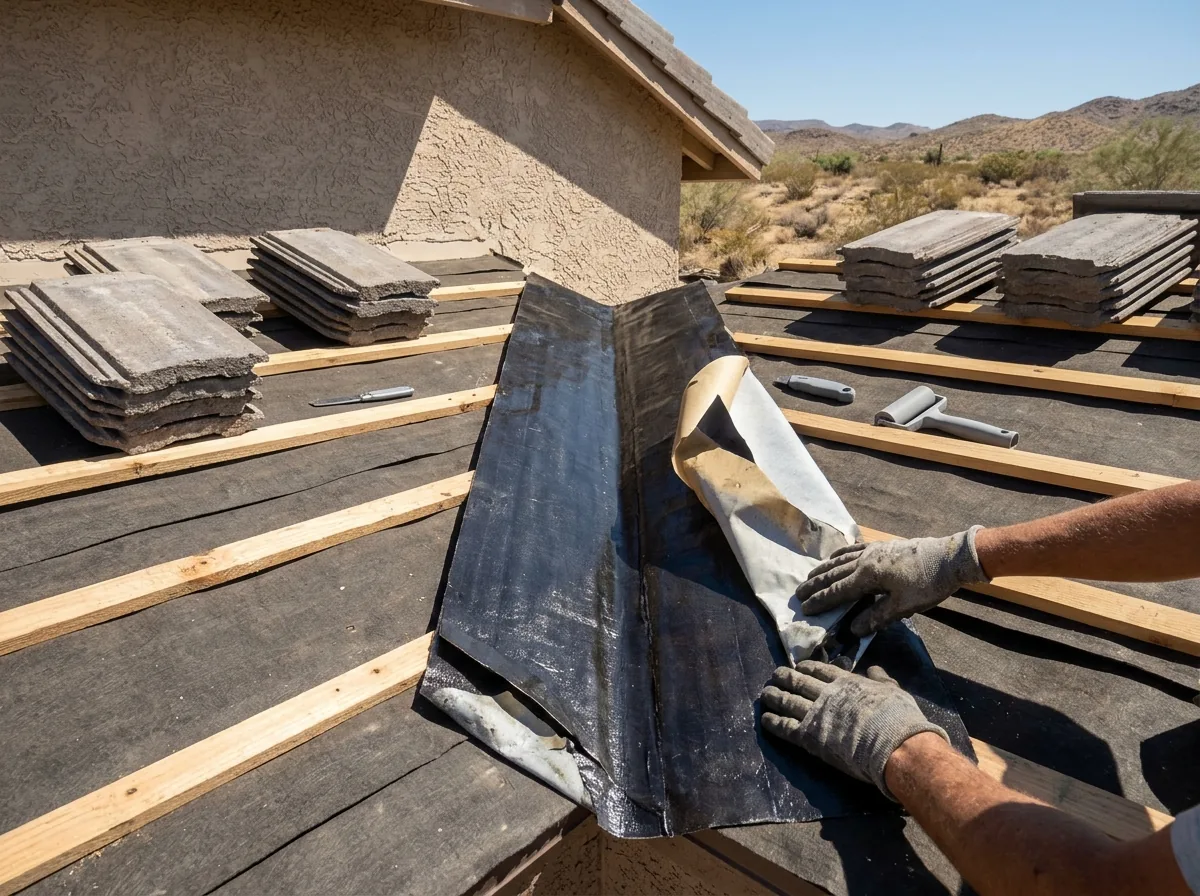
Self-adhered membrane (ASTM D1970) has a sticky back under a release sheet and bonds to whatever it's pressed onto. JLC recommends it along valleys even though the code doesn't ask for it there. The 2025 code also allows a single layer of it as the whole underlayment, but JLC warns that stuck straight to the sheathing it can't come off at the next re-roof without damaging the deck. Ask whether your quote uses it at the valleys, eaves and roof-to-wall joints, where water concentrates.
- Rubber (SBS) membrane, material only: about $0.20 to $0.90 per sq ft
Batten and counter-batten replacement
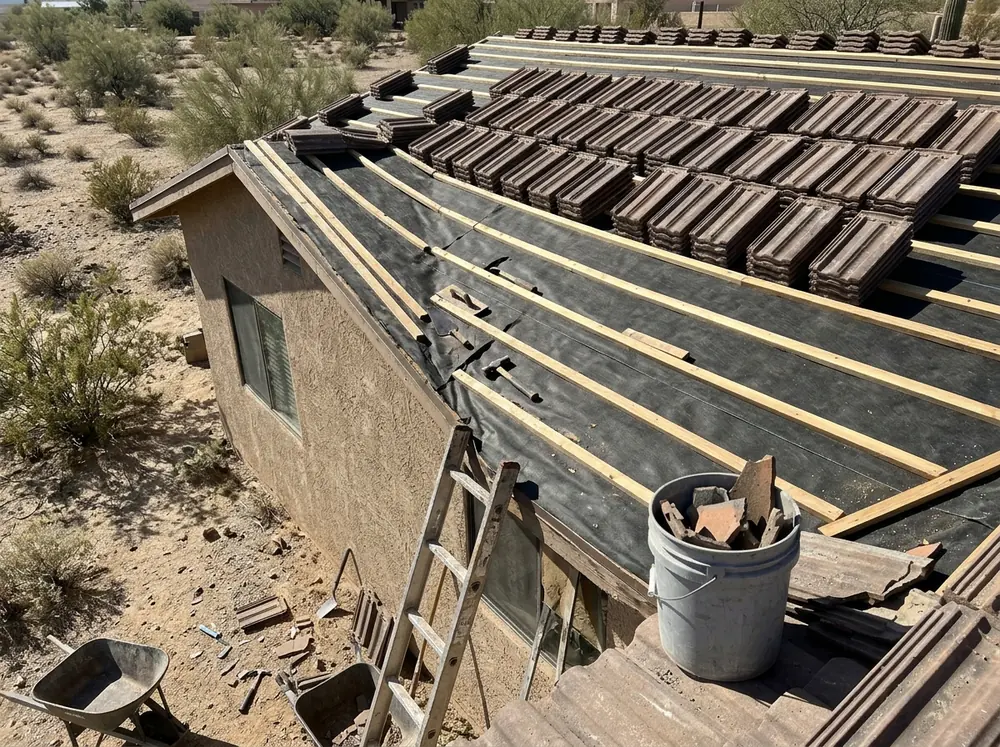
Battens are the wood strips the tile hangs on, nailed through the felt. Old battens that have rotted at the nail holes or split get replaced, and the quote should say whether they're all new or reused where sound. Some roofers add counter-battens, strips running up the slope under the horizontal battens. JLC says they improve drainage and airflow under the tile.
Reusing the original tile and the breakage allowance
The code lets sound clay or concrete tile go back on, but not cracked or broken pieces. Expect some tiles to break as they come off. JLC tells installers to allow 3% extra on new tile for waste and breakage. On a relay of old tile, ask the roofer what allowance they use and where the replacements come from. A close match from a hidden slope is the usual fix for a discontinued profile; see discontinued roof tile matching.
Why Hesperia homeowners call Hesperia Tile Roofing
- Asking for a quote is free and you're under no obligation
- Each request goes to a single tile roofer, not sold to a list
- Ask that tear-off, felt, deck allowance and permit sit on one written price
- You never pay for the referral
Hesperia Re-Roof Permit and Paperwork
The city doesn't publish a page that says in plain words when a re-felt needs a permit. Its 2025-26 fee schedule, effective December 1, 2025, lists re-roofs under the two-inspection permit at $329 (it was $307 the year before). The Building and Safety residential roofing compliance form also asks for the cool-roof product ID when more than half the roof is replaced. A relay puts the same tile back, so ask the roofer and the city whether the cool-roof part applies to your job. Plan on the permit, and put in the contract who pulls it and who books the two inspections.
How a Lift and Relay Goes, Slope by Slope
STEP 01
Lift a few tiles first
Before quoting, the roofer lifts tiles in a few spots, usually at a valley, an eave and near a vent, and checks the attic for stains.
STEP 02
Strip one section at a time
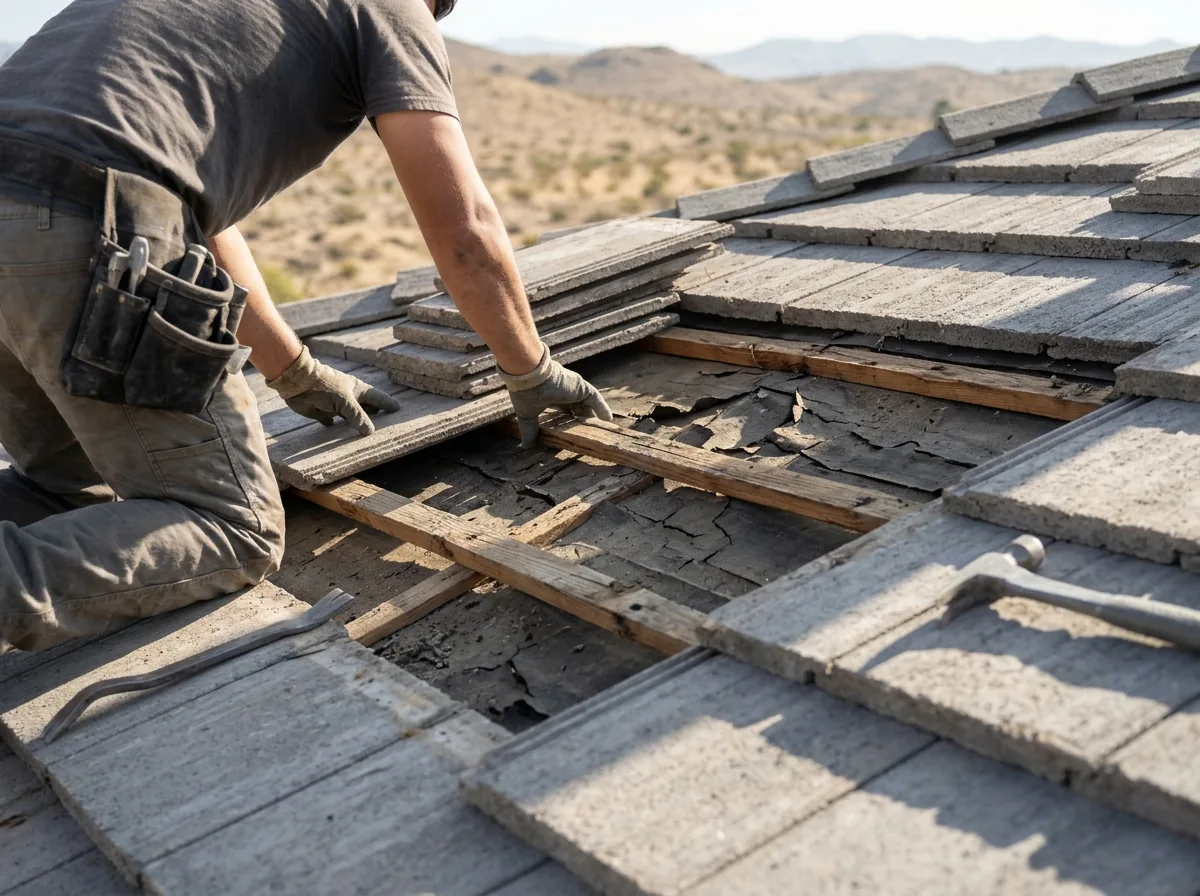
Tile comes off a slope and is stacked on the roof or the ground. The old felt and failed battens go, and the deck gets checked for soft spots.
STEP 03
Dry in and re-flash
New underlayment goes on with valley metal and wall flashing. Rusted flashing must be replaced, not reused.
STEP 04
Relay and inspect
The tile goes back with new pieces worked in, then the ridge is reset and the city inspects. Working a slope at a time keeps the rest of the roof covered.
For cost alongside a full replacement, see tile roof replacement.