
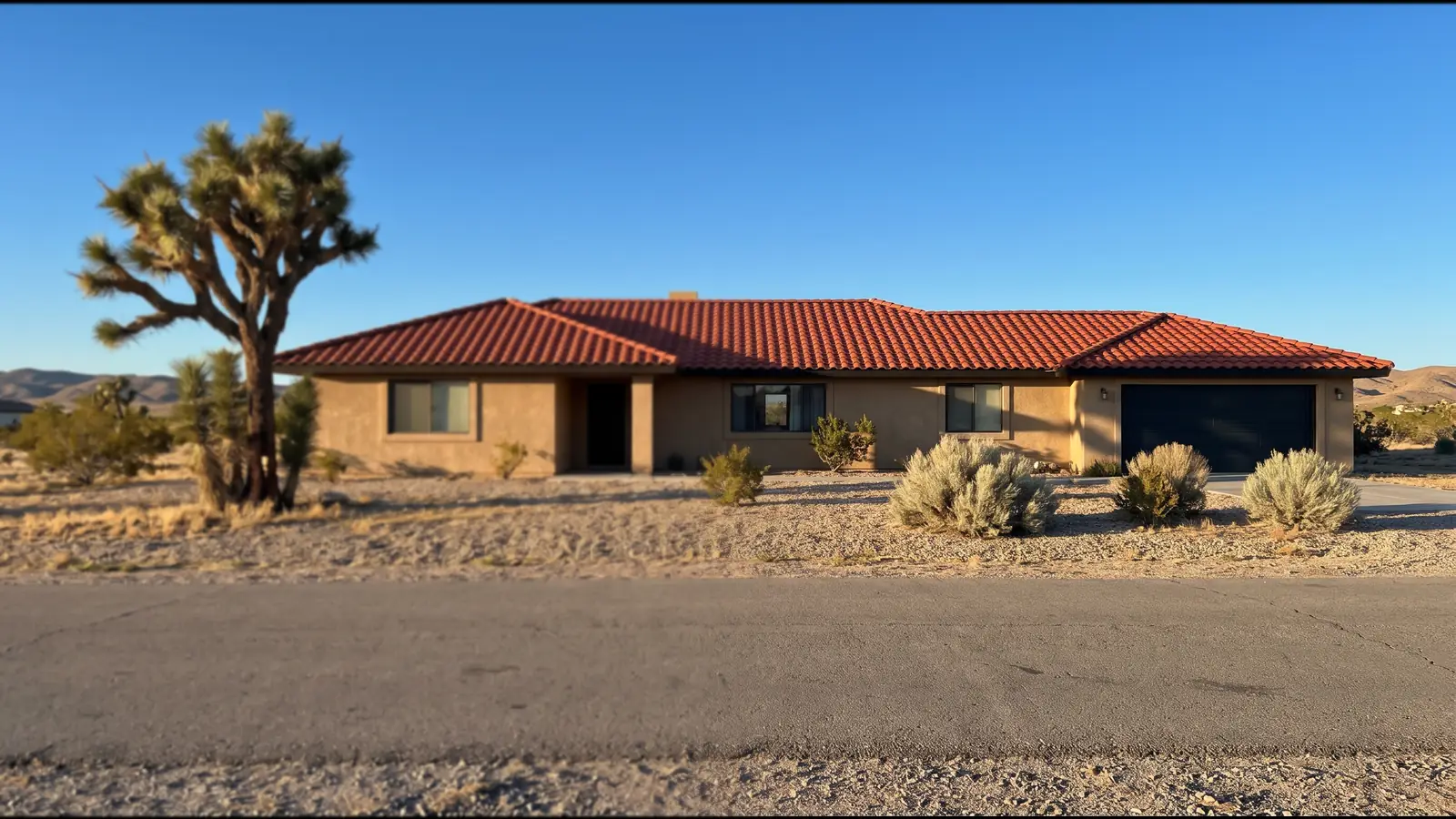
Types of Commercial Tile Roofs in Hesperia
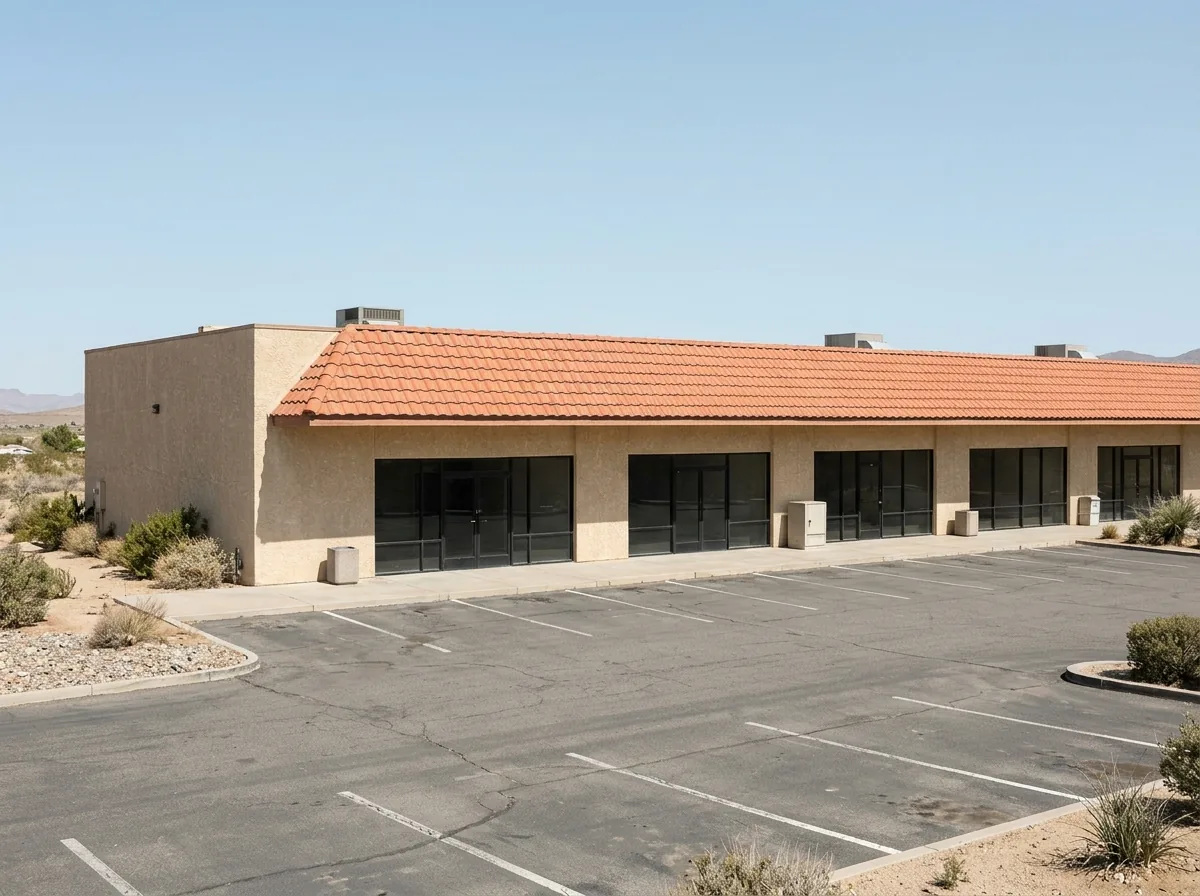
Retail and Office Buildings With Tile Mansards
Many strip centers and small office buildings wear a band of tile on a steep mansard over the storefronts, with a flat roof behind it. The mansard is mostly for looks, but it still has to shed water: the tile needs a slope of at least 2½ in 12 and solid sheathing under it, the same as on a house. When it leaks, the water can turn up inside a tenant's space, well away from the gap that let it in.
Churches and Community Buildings
Sanctuaries often have tall, steep tile roofs, bell towers or gabled entries that need more staging and fall protection than a house. Plan the work around services and events, and ask how the roofer will protect the entry and parking area during tear-off. If the building has an older array or rooftop equipment, list it in the request so the visit covers it.
Restaurants and Hospitality
Restaurants and motels add penetrations: exhaust hoods, vents and HVAC lines through or beside the tile. The building code wants flashing at every penetration and wall intersection. On a tile section, each one needs its own flashing worked into the courses, and each is a place to check first when a ceiling stains. If you need night or early-morning work, ask whether the roofer's crew and the city's noise rules allow it.
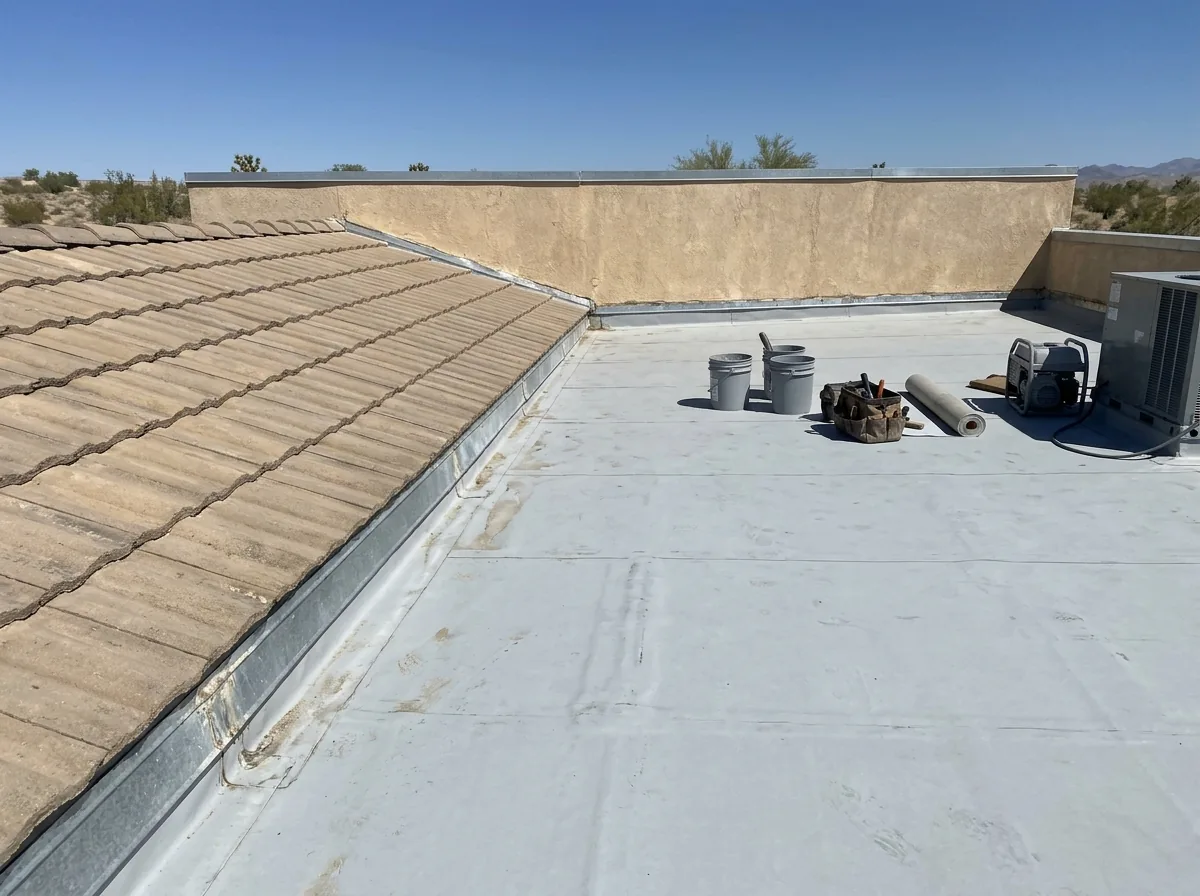
Tile Over Low-Slope Transitions and Parapets
This is the detail to get right. Tile can't go below 2½ in 12, so the roof behind it is a membrane such as modified bitumen or single-ply, which needs at least ¼ in 12 for drainage. Parapet tops must be coped and drain, and flashing has to stop water at every parapet and wall intersection. Where tile ends at a flat roof, ask who owns that seam: the tile roofer, the membrane roofer, or one crew doing both.
Work Around Business Hours
Commercial tile work is usually scheduled section by section so storefronts stay open. Agree in writing where the dumpster and tile pallets go, which entrances stay open, and how walkways under the work are covered. Ask for the order of work by elevation, so tenants on each side know which days to expect noise.
Why Hesperia homeowners call Hesperia Tile Roofing
- Asking for a quote is free and you're under no obligation
- Each request goes to a single tile roofer, not sold to a list
- Ask that tear-off, felt, deck allowance and permit sit on one written price
- You never pay for the referral
What Commercial Tile Roofing Costs in Hesperia
No published cost guide prices commercial tile. The residential ranges on the tile roof replacement page are a floor, not a quote. Commercial jobs add staging, access, after-hours work and the transition to the flat roof, so the written quote after a site visit is the number to budget from. Ask for these lines separately:
- Tile tear-off or lift and relay, by elevation
- Underlayment, including any double layer on slopes from 2½:12 to 4:12
- Flashing at parapets, walls and each rooftop penetration
- The tile-to-membrane transition, and who warrants it
Fire Rating and Permits for Commercial Tile
The California Building Code sets a minimum roof class by construction type: Class B for most types, Class C for types IIB, IIIB and VB. In a fire hazard zone or WUI area, the roof also has to meet the code's wildfire section, and Hesperia's fire-zone bulletin gives a Class A tile assembly with a 72-pound cap sheet as its example. Hesperia has mapped large parts of the city into these zones; the fire-resistant tile roofing page shows how to check a parcel. Ask the roofer who pulls the permit, and check that they hold the right state license; the tile roof repair page explains how to look one up.