
Tile Roof Bird Stop and Eave Closure Options in Hesperia
Curved tile leaves an open arch under every tile at the eave. Left open, it's a doorway for birds and an inlet for embers. These are the ways a roofer closes it, and the problems that follow when nobody does.
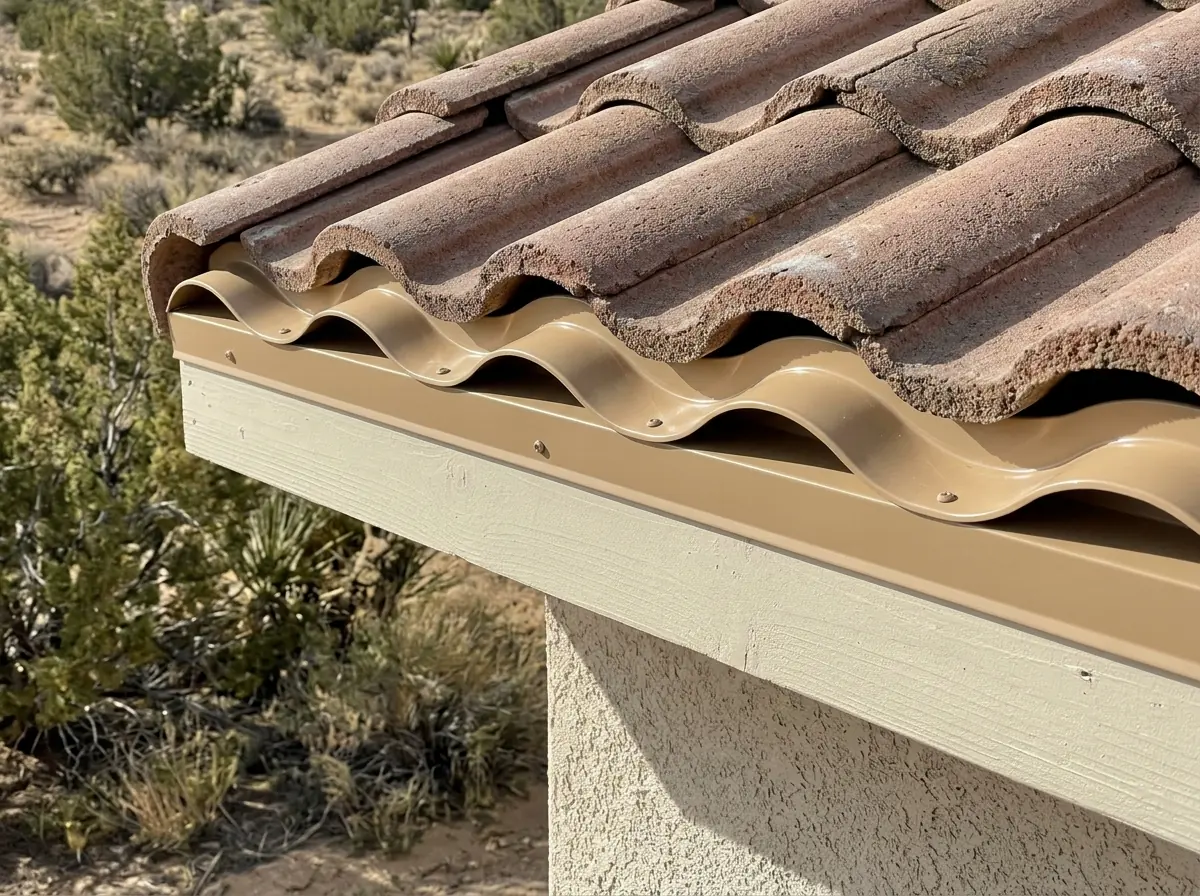
Pre-Formed Bird Stops for S and Barrel Tile
A pre-formed bird stop is a metal strip cut to the curve of the tile it sits under. One tile maker describes it as code-approved 26-gauge galvanized or aluminum that keeps birds and other wildlife from getting under the tile. Versions exist for S-tile, medium profiles and flat tile, in several colors, and with or without weep holes. The profile has to match your tile, so ask the roofer to confirm the shape before ordering.
Metal Eave Closures and Eave Risers
The industry installation manual separates two jobs that one strip often does. The eave closure fills the curved opening under S or pan-and-cover tile. The eave riser lifts the nose of the first tile course so it lies in the same plane as the tiles above. Without the rise, the first row can sit at the wrong angle, and the gap under it grows. On a roof where the first row looks tipped down, a missing riser is one possible cause worth asking about.
Mortared (Mudded) Eave Closures
Some barrel and S-tile roofs have the eave openings packed with mortar instead of metal. The manual counts mortar among the materials for sealing larger gaps against birds and vermin, and calls mortar point-up non-structural. Once that mortar cracks and falls out, a metal bird stop is one replacement; if you like the mudded look, ask for the mortar to be redone instead.
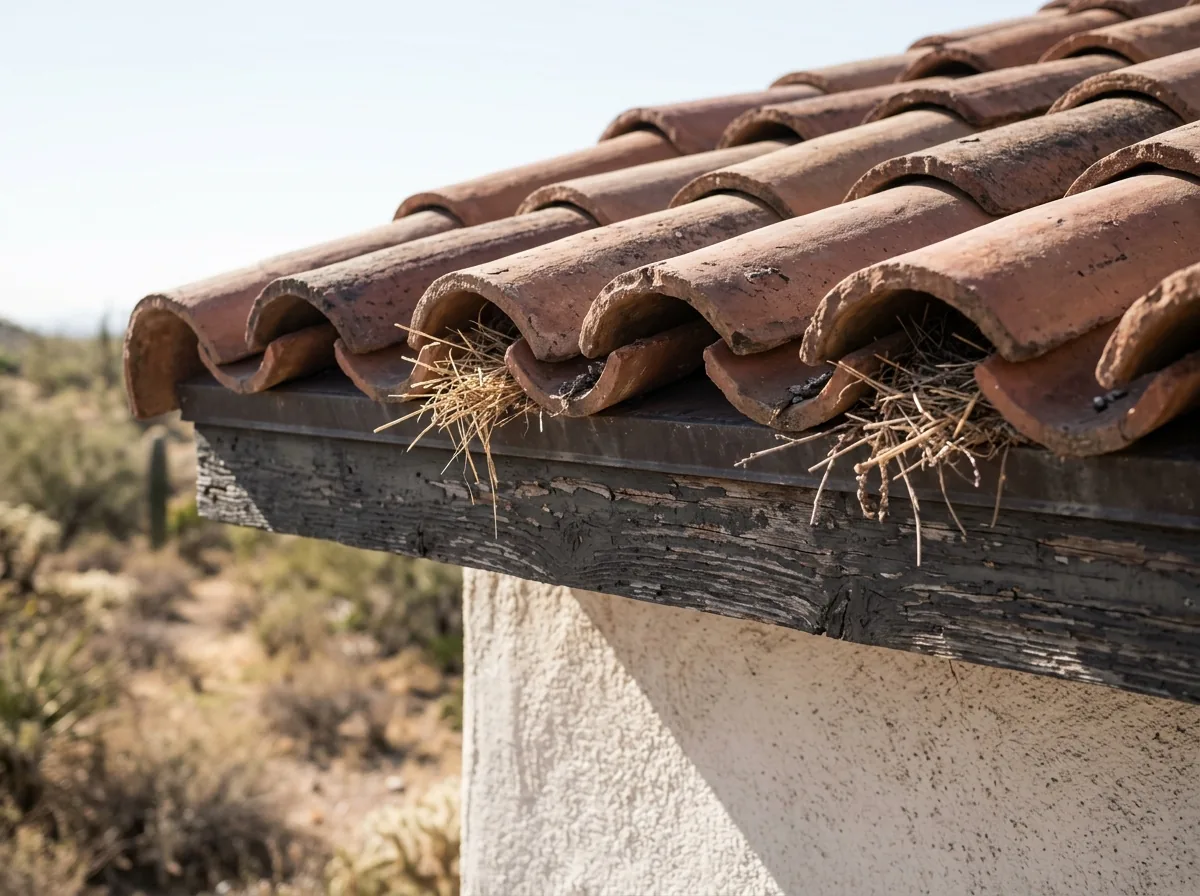
Birds Nesting Under Tile
Nests under the eave course pack debris against the underlayment, and HomeGuide lists pests among the causes of loose tiles. Bird stops are the long-term fix, but the order matters. Clear the nests and debris first, then check the felt and fascia under them for damage, then fit the closure. The manual also suggests metal, honeycomb plastic, foam fillers or mortar for larger openings at rakes and ridges, not only the eaves.
Vermin Screening at Other Gaps
Larger gaps away from the eaves need closing too, such as where trim tile meets field tile. The manual groups the fixes under vermin screening and weather blocking, the material that blocks wind-driven moisture between field and trim tile. If you hear scratching in the attic, ask for every opening to be closed in one visit.
Why Hesperia homeowners call Hesperia Tile Roofing
- Asking for a quote is free and you're under no obligation
- Each request goes to a single tile roofer, not sold to a list
- Ask that tear-off, felt, deck allowance and permit sit on one written price
- You never pay for the referral
Bird Stops in Hesperia Fire Hazard Zones
Large parts of Hesperia now fall in mapped fire hazard zones. For tile roofs there, California's wildland code calls for bird stops at the eaves where the tile profile fits. Ember protection is the point of the fire-zone rules. If you're adding bird stops anyway, ask whether the roof meets the rest of the fire-zone rules. Those rules, and how to check your parcel, are on fire-resistant tile roofing.
How a Bird Stop Retrofit Goes
STEP 01
Eave walk and tile count
The roofer checks each eave run, counts broken eave tiles, and notes nests or damaged fascia.
STEP 02
Clear and inspect
The eave course comes off, nests and debris come out, and the felt and fascia get a look.
STEP 03
Fit the closure
The bird stop or riser is fastened along the eave, matched to the tile profile.
STEP 04
Relay the eave course
Tiles go back, cracked ones are replaced, and the job gets photographed.