
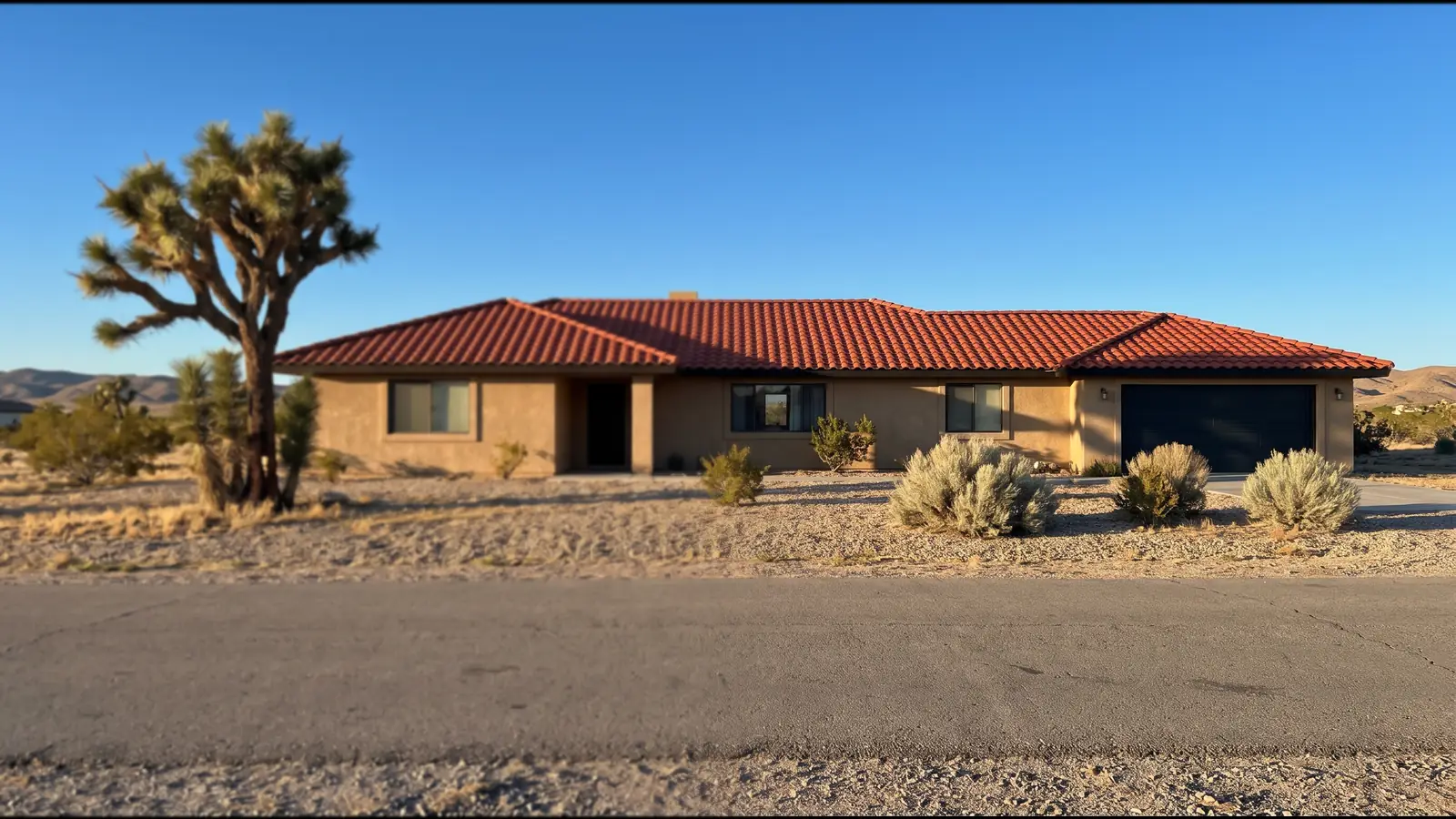
Spanish S-Tile Types in Hesperia
Inspectors class the S-tile as a medium-profile tile: curved enough to give the rolling Spanish look, but made as one piece that locks into its neighbors. Clay and concrete versions behave differently on the roof.
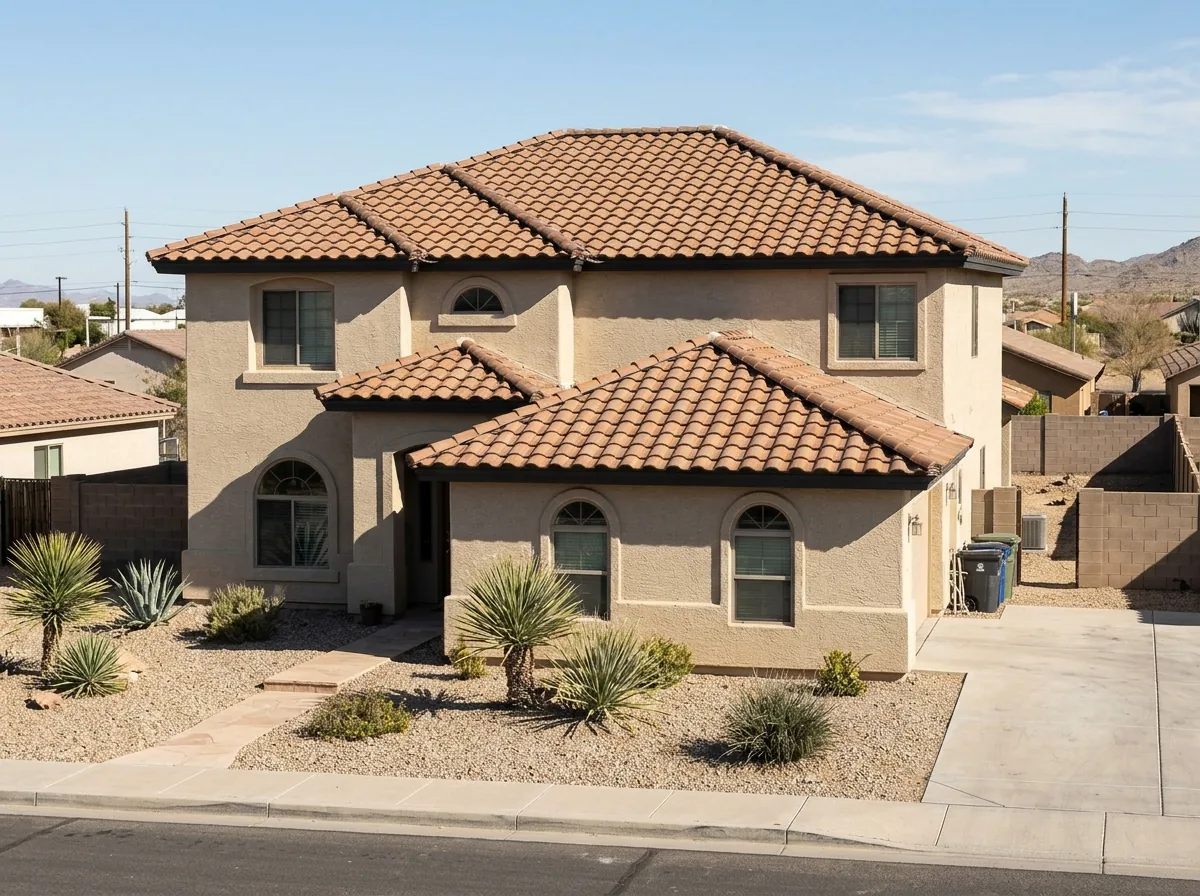
One-Piece Concrete S-Tile
The concrete S-tile is cast in one piece with its interlocking side lap molded in. Standard weight is about 900 lb per 100 sq ft, and the lightweight version of the same profile comes in near 570. Because the lap edges are thinner than the body, cracked corners along one side are the usual damage. Concrete S-tile can also lose its surface color with age; the concrete tile roofing page explains slurry coats and fading.
One-Piece Clay S-Tile
The clay S-tile is the most common clay roof tile in the country: NIST puts one-piece S-tile at about 60% of the clay tile market. A typical clay S-tile is about 19 by 12 inches, laid about 90 to a square at roughly 788 lb. Its color is fired in, so it doesn't chalk the way coated concrete can. Clay S-tile breaks more easily underfoot, and for High Desert winters it should be a Grade 1 tile (see clay tile roofing).
Medium-Profile S-Tile
Not every S-tile has the tall crown. Concrete makers sell a lower, medium profile alongside the high one; one maker's medium S profile weighs about 903 lb per 100 sq ft standard and 550 lightweight. Under the ASTM clay standard, a low-profile tile (Type II) has a rise no more than a fifth of its width, and a high-profile tile (Type I) has more. A lower crown gives a softer wave from the street. If you're replacing a few pieces, the profile is what you match first, before color: a medium tile won't sit in line with a high one.
Color Blends and Boosted Courses
S-tile is sold in blends as well as single colors, and one concrete maker recommends blends because single-color batches vary from tile to tile. Boosting is the upgrade: a separate cap piece set in mortar on top of the installed S-tile, for an old-world look closer to two-piece clay. Each boosted piece on one concrete line weighs about 4.8 lb. That adds load and labor, so price it as its own line on the quote.
S-Tile Eave and Rake Trim
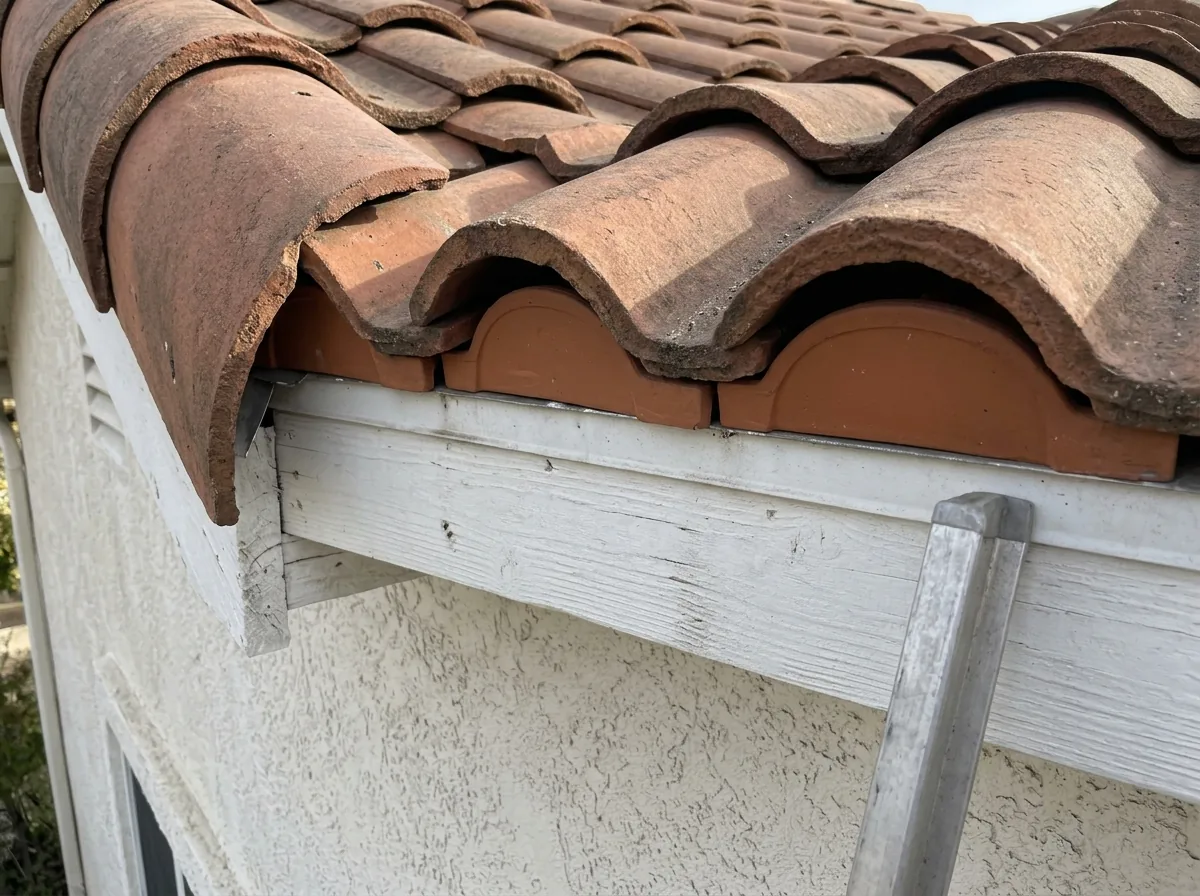
The curve that gives S-tile its look leaves open gaps under the first course at the eave. Inspectors expect a bird stop there on medium- and high-profile tile. It keeps out birds and insects and stops wind from getting under the course and lifting it. The stop can be pre-formed to the profile or built from mortar. Along the rakes, ridges and hips, InterNACHI says loose and missing tiles show up more than anywhere else, so those trim pieces deserve the closest look after a windy week. Closure options are on the bird stop and eave closure page.
Why Hesperia homeowners call Hesperia Tile Roofing
- Asking for a quote is free and you're under no obligation
- Each request goes to a single tile roofer, not sold to a list
- Ask that tear-off, felt, deck allowance and permit sit on one written price
- You never pay for the referral
Spanish S-Tile vs Barrel Tile: How to Tell
From the curb they look alike. On the roof they're different systems:
| Spanish S-tile | Two-piece barrel (mission) | |
|---|---|---|
| Pieces | One piece, pan and crown together | Separate pans and covers |
| Side joint | Interlocks with the next tile | Covers overlap the pans |
| Pieces per square | About 88 to 90 | About 150 to 180 |
| Clay weight per square | About 790 to 840 lb | About 980 to 1,170 lb |
| Installed cost | $7 to $21 per sq ft | $7.50 to $23.50 per sq ft |
If your roof has separate rounded caps over channel tiles, it's barrel, and the barrel tile roofing page is the one to read.
Spanish Tile Repairs and Re-Roofs in Hesperia
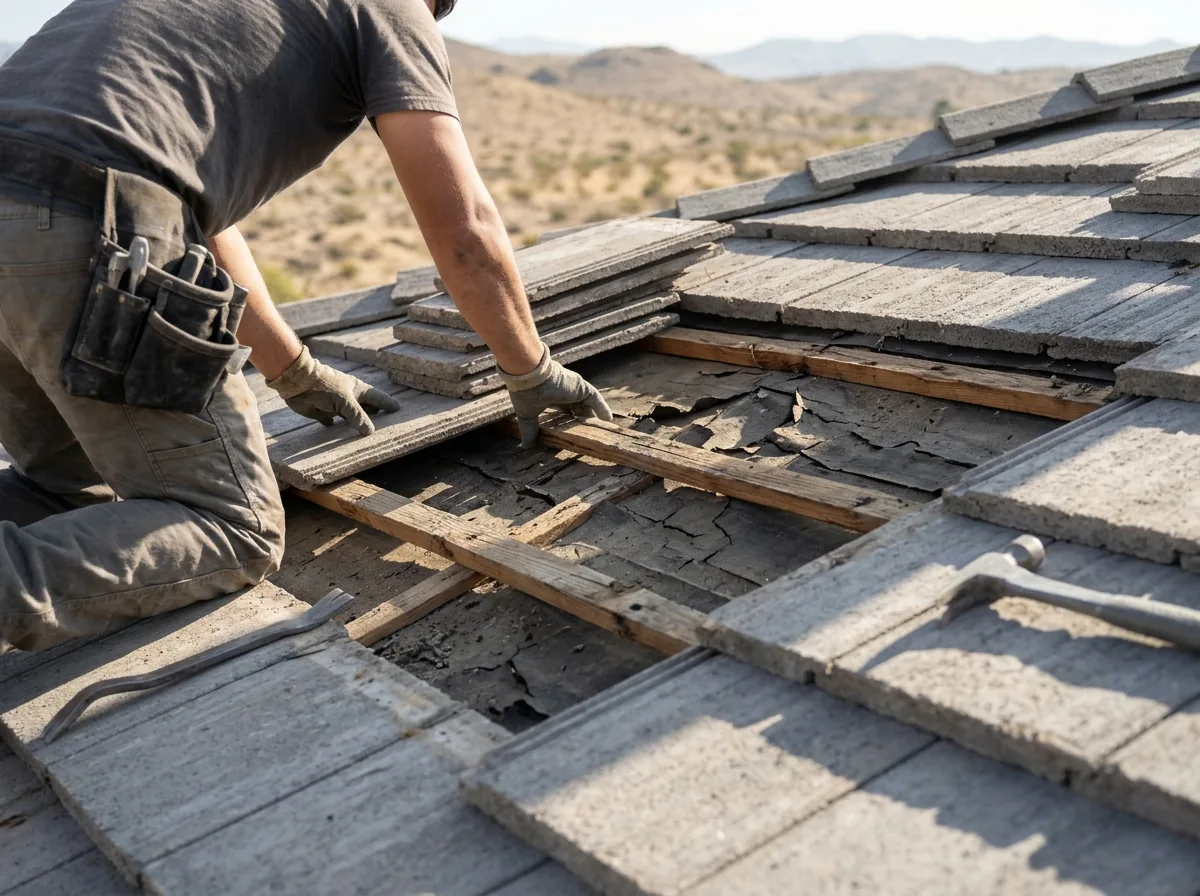
Work on an S-tile roof in Hesperia usually falls into one of three jobs. A few cracked tiles get swapped for a matched profile. A worn underlayment gets a lift and relay, with the sound S-tile going back on. Or the whole roof is replaced with new S-tile. On a relay, ask how many tiles the roofer expects to break coming off and where replacements will come from. On a re-roof in a fire hazard zone, the bird stops at the eaves are part of the required Class A details; the fire-resistant tile roofing page covers those rules.