
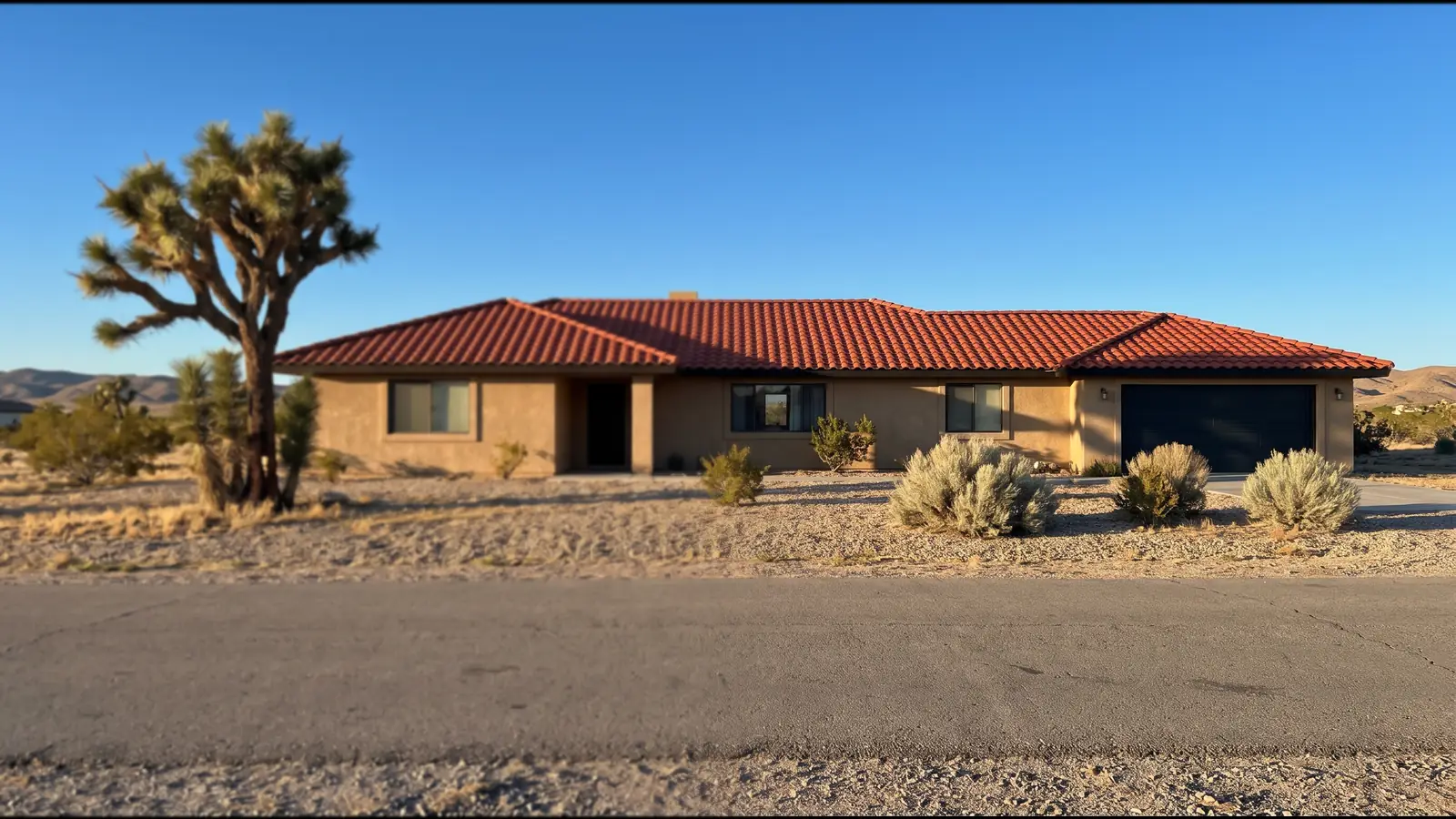
Tile Roof Flashing and Valley Repair Types in Hesperia
The JLC field guide puts it plainly: on a tile roof, the underlayment and flashings keep the water out, and the tile mostly shields them. These are the places that metal lives.
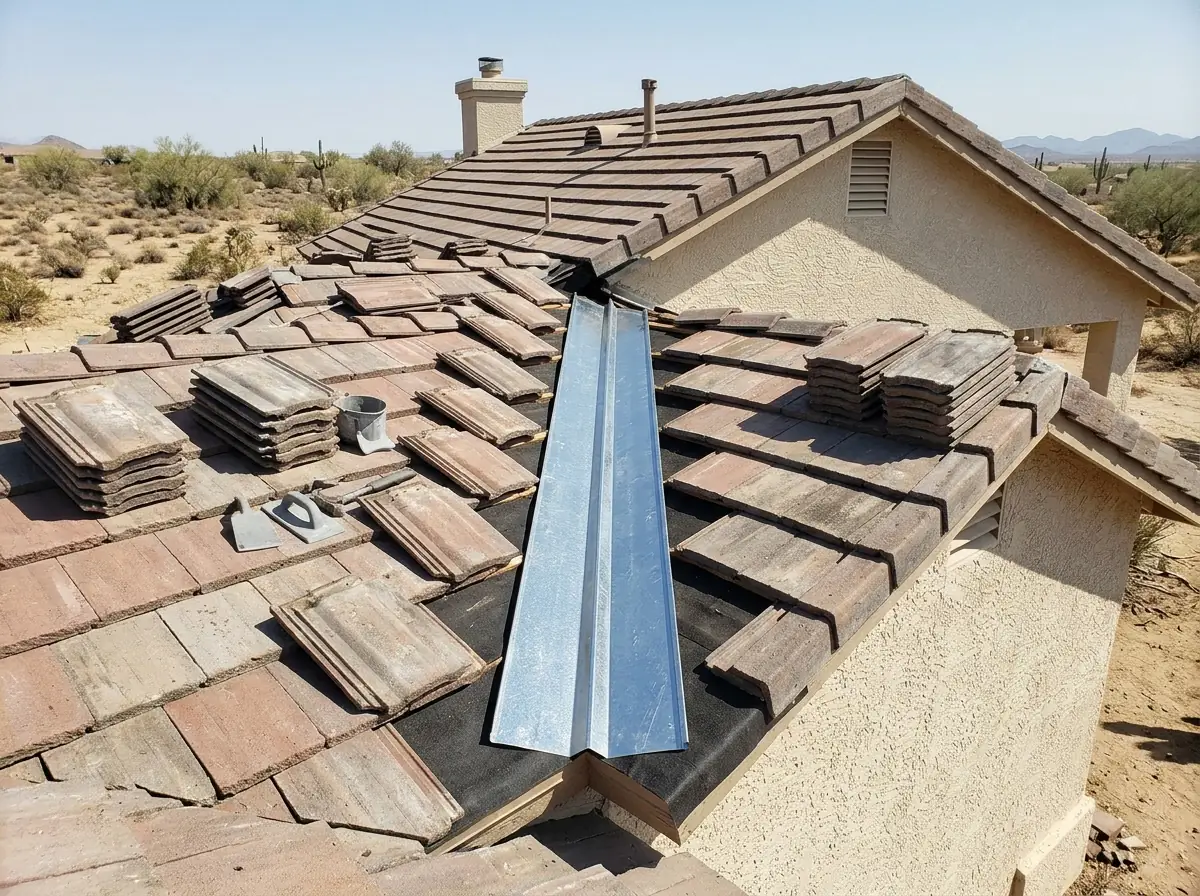
Open Metal Valleys and W-Valleys
A valley is where two slopes meet and drain together. The 2025 California Residential Code sets the minimum for tile valleys:
- Metal at least No. 26 gauge, extending 11 inches or more each way from the centerline
- A splash diverter rib at least 1 inch high down the middle
- End laps of 4 inches or more
- On slopes of 3:12 and steeper, a 36-inch underlayment strip under the metal, on top of the regular underlayment
The JLC guide adds that valley metal for tile should have upturned edges, and that closed "W" valleys clog less with debris. The code's extra cementing rule for valleys only applies where January averages 25°F or colder; NOAA's Hesperia station averages about 48°F in January, so it doesn't apply here.
Headwall and Sidewall (Pan) Flashing
Where a roof runs into a stucco wall, the code requires flashing at the joint. Along a sidewall, tile roofs use a pan (wall tray) that runs under the tile along the wall. The industry manual sets the pan trough at 6 inches minimum. JLC's detail runs the underlayment at least 4 inches up the wall, adds a counterflashing above, and uses metal with an upturned edge. On a re-roof against existing stucco, the manual suggests a Z-bar or surface-mounted reglet counterflashing.
Chimney Flashing on Tile
Chimneys combine every flashing type: an apron below, pans or step flashing at the sides, and a saddle above. The code requires a cricket or saddle on the uphill side of any chimney or penetration more than 30 inches wide, so water splits around it instead of pooling behind it. HomeGuide puts chimney flashing repair at $200 to $1,000.
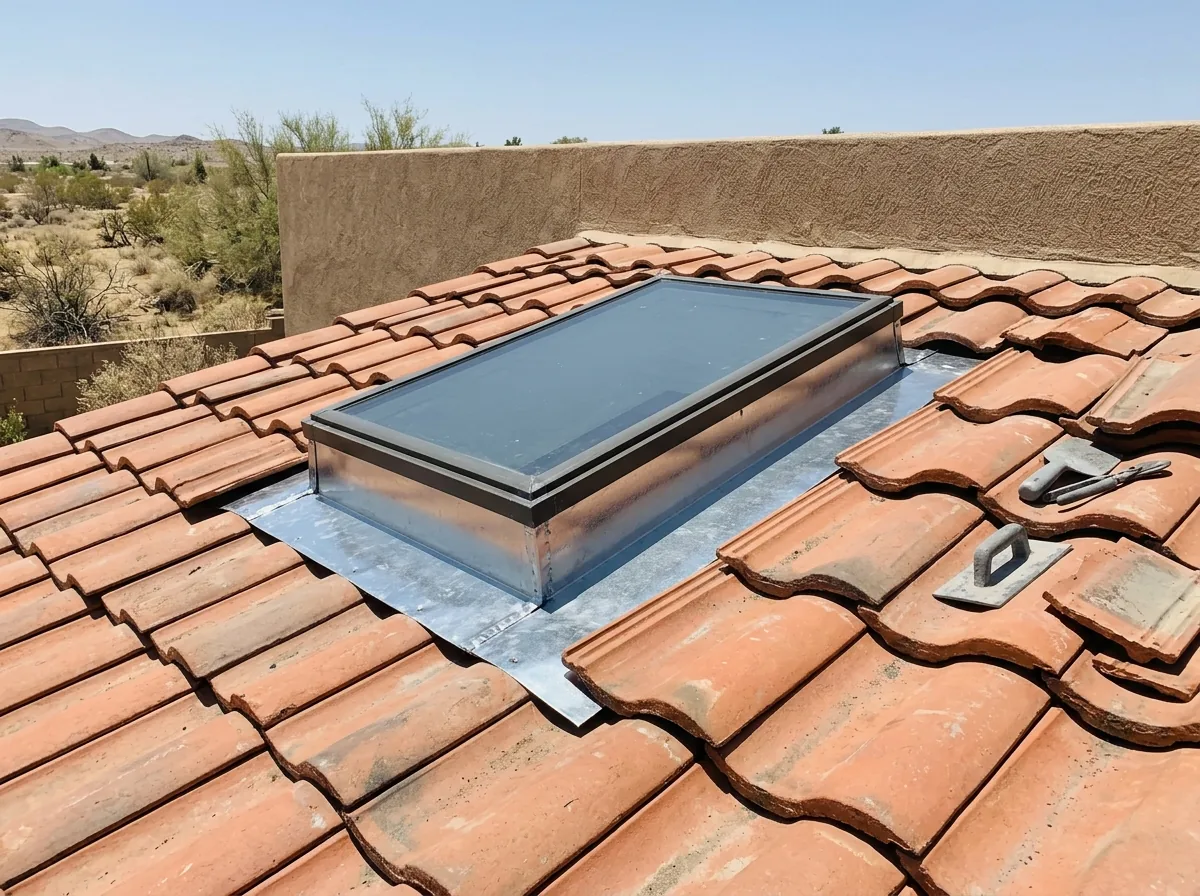
Skylight Flashing Kits for Tile
Skylight flashing on tile follows the skylight maker's instructions as well as the tile details. The industry manual groups skylight, chimney and saddle flashing together. Code lets a unit skylight flashed per its maker's instructions skip the cricket. Ask whether the quote uses the skylight maker's tile kit, and whether the skylight itself is worth replacing while the tile is off. HomeGuide's range for skylight flashing is $200 to $500.
Vent and Pipe Flashing (Lead or Flexible)
Every plumbing vent on a tile roof needs two flashings: one sealed to the deck and underlayment, and a second shaped over the tile. The industry manual makes both mandatory, and the JLC guide says to flash pipes above and below the tile. The tile-level piece is usually soft metal that can be dressed to the curve: lead of at least 3 pounds per square foot, dead-soft aluminum, or copper. HomeGuide lists vent pipe flashing at $200 to $500.
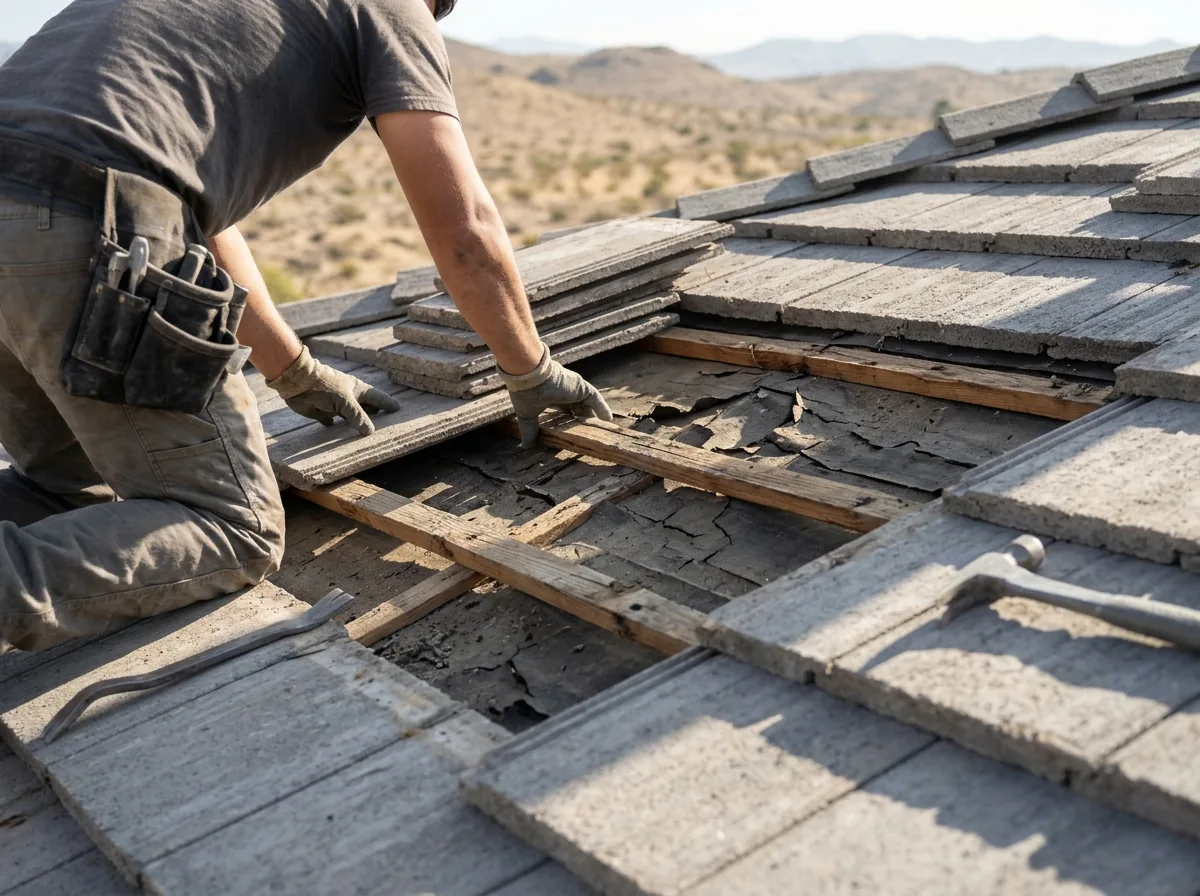
Why Hesperia homeowners call Hesperia Tile Roofing
- Asking for a quote is free and you're under no obligation
- Each request goes to a single tile roofer, not sold to a list
- Ask that tear-off, felt, deck allowance and permit sit on one written price
- You never pay for the referral
Flashing Repair on Older Hesperia Tile Roofs
About 69% of Hesperia's homes were built before 2000. On a roof that age, the valley metal and pans may date to the original install. The code is clear that when a tile roof is redone, rusted, damaged or deteriorated flashing gets replaced. So a quote that relays tile over old valley metal is worth questioning.
If the underlayment across the roof is near the end of its life, it can make more sense to replace the flashing as part of a tile roof underlayment replacement than as a stand-alone job. If water is already showing indoors and the source isn't obvious, start with tile roof leak repair.
What to Ask on a Flashing or Valley Quote
- Which flashings are being replaced, by location, and in what metal and gauge?
- Will the valley get a new underlayment strip under the metal, or only new metal?
- How will the tile cut along the valley be handled, and who supplies replacements for tiles that break?
For a wall
Pan flashing and counterflashing, and does the stucco need cutting?