
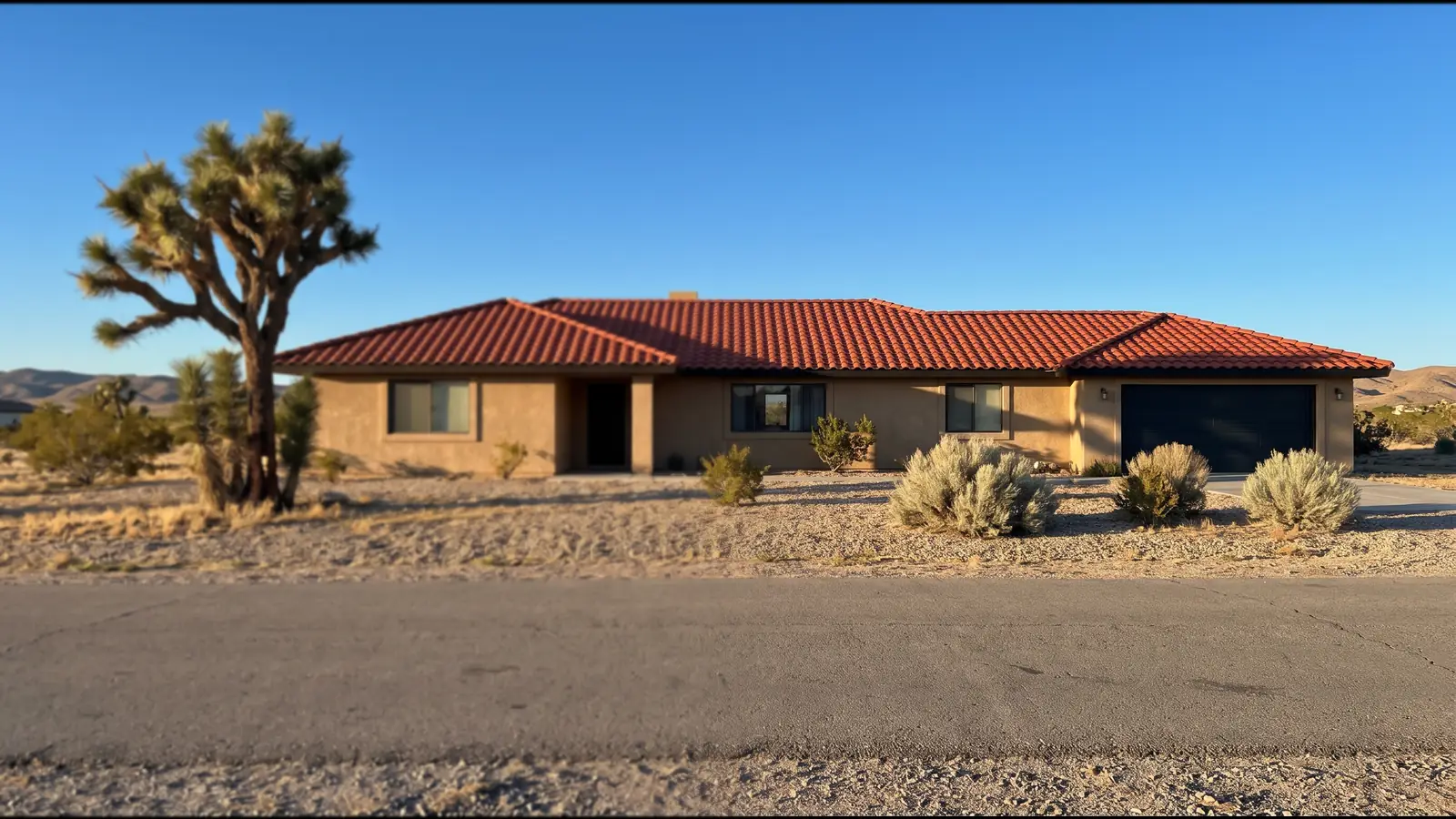
Tile Roof Leak Types and Where They Start in Hesperia
On a tile roof, water usually gets in where the felt is torn or the metal has failed, then runs downslope on the felt before it finds a way through. These are the places a roofer checks first.
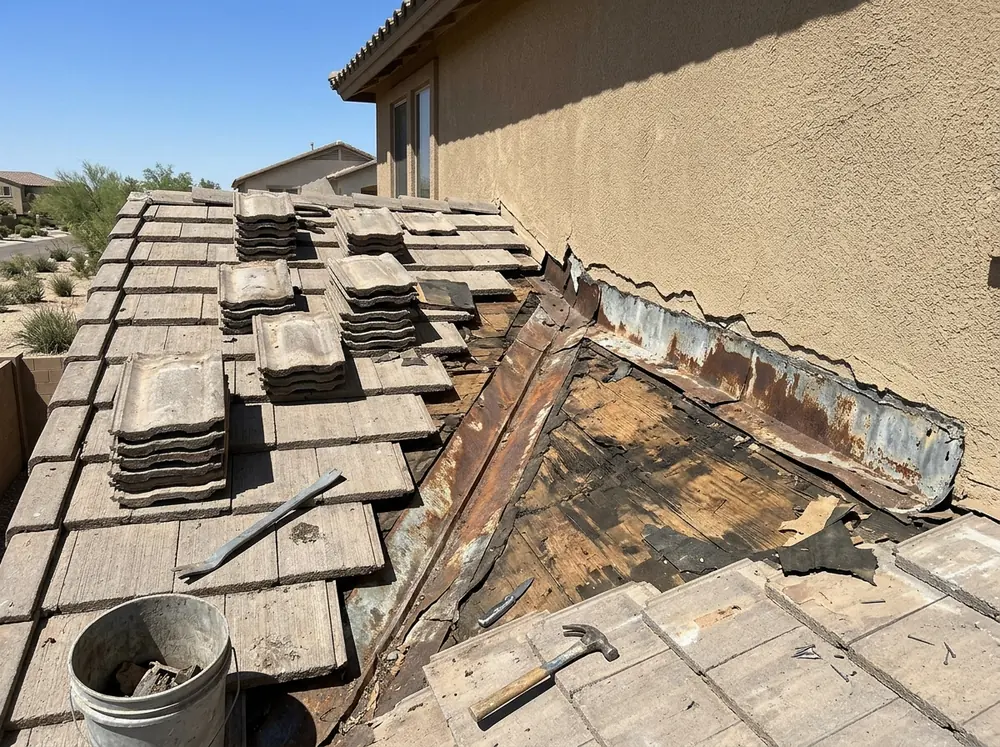
Leaks at valleys and headwalls
Valleys carry the water from two slopes, and debris that collects there backs water up under the tile. A headwall, where a slope runs into a stucco wall, is the other usual entry point. Rusted valley metal and cracked stucco over the flashing line are the things to look for. Valley and flashing work is detailed on tile roof flashing and valley repair.
Leaks around vents, pipes and skylights
Each pipe, vent and skylight is a hole through the waterproof layer. JLC says vent pipes on tile need flashing both above and below the tile. A lead or rubber boot that has split in the sun, or a skylight curb without a cricket on its uphill side, sends water straight down the pipe or frame into the ceiling. These leaks tend to drip near the penetration, which makes them easier to trace than a valley leak.
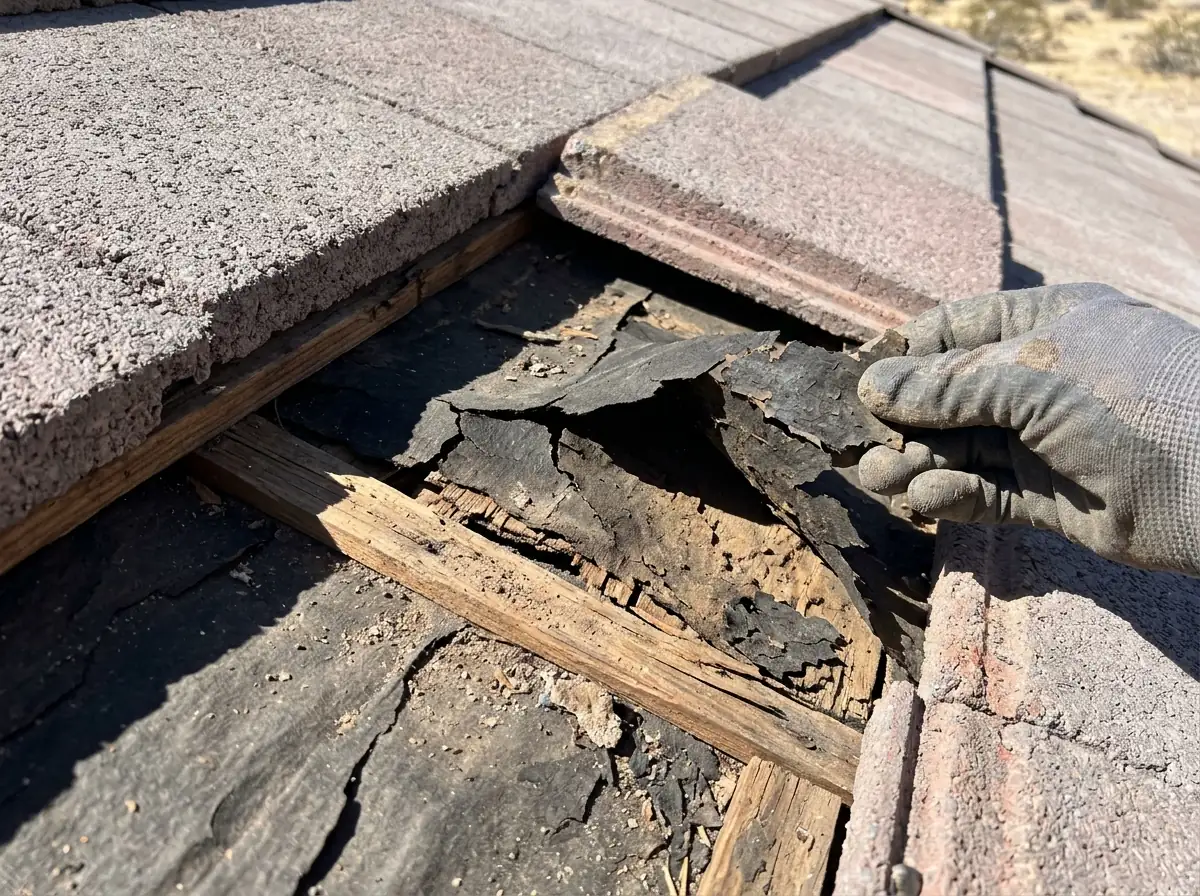
Leaks from torn or brittle underlayment
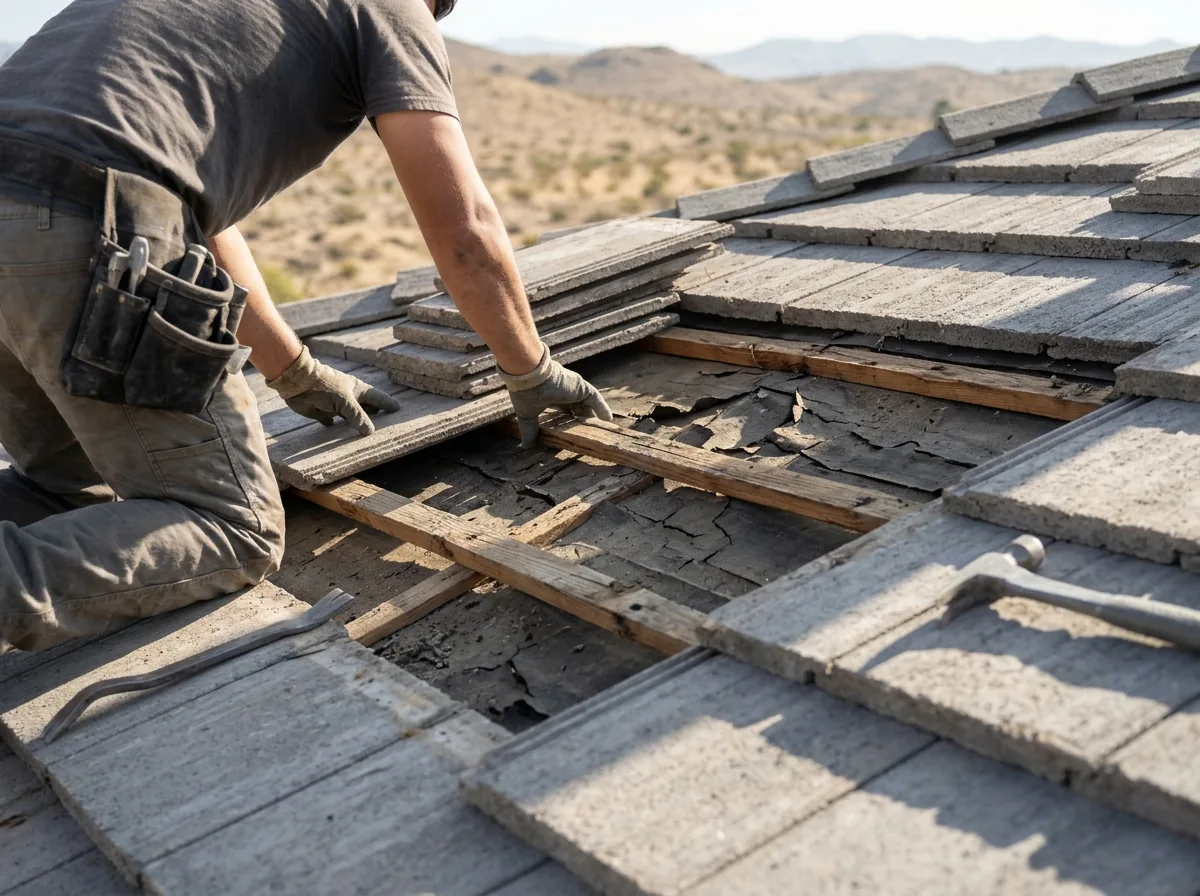
Felt under tile is often good for 20 to 30 years. After that it dries out and splits. With about 108 days a year at 90°F or hotter, the felt under Hesperia tile spends summers in an oven. When the roofer lifts a tile and the felt flakes in their hand, the leak is the whole roof's felt, not one spot. Patching gives a season; an underlayment replacement fixes the cause.
Leaks at ridge, hip and rake edges
Ridge and hip caps cover the joint where two slopes meet. When the mortar under them cracks, or a dry-set ridge loses its fasteners, caps shift and wind-driven rain gets in. At the rakes, a lifted edge tile opens the felt below it. These leaks often show up after a windy storm. See tile roof ridge and hip repair for the cap work.
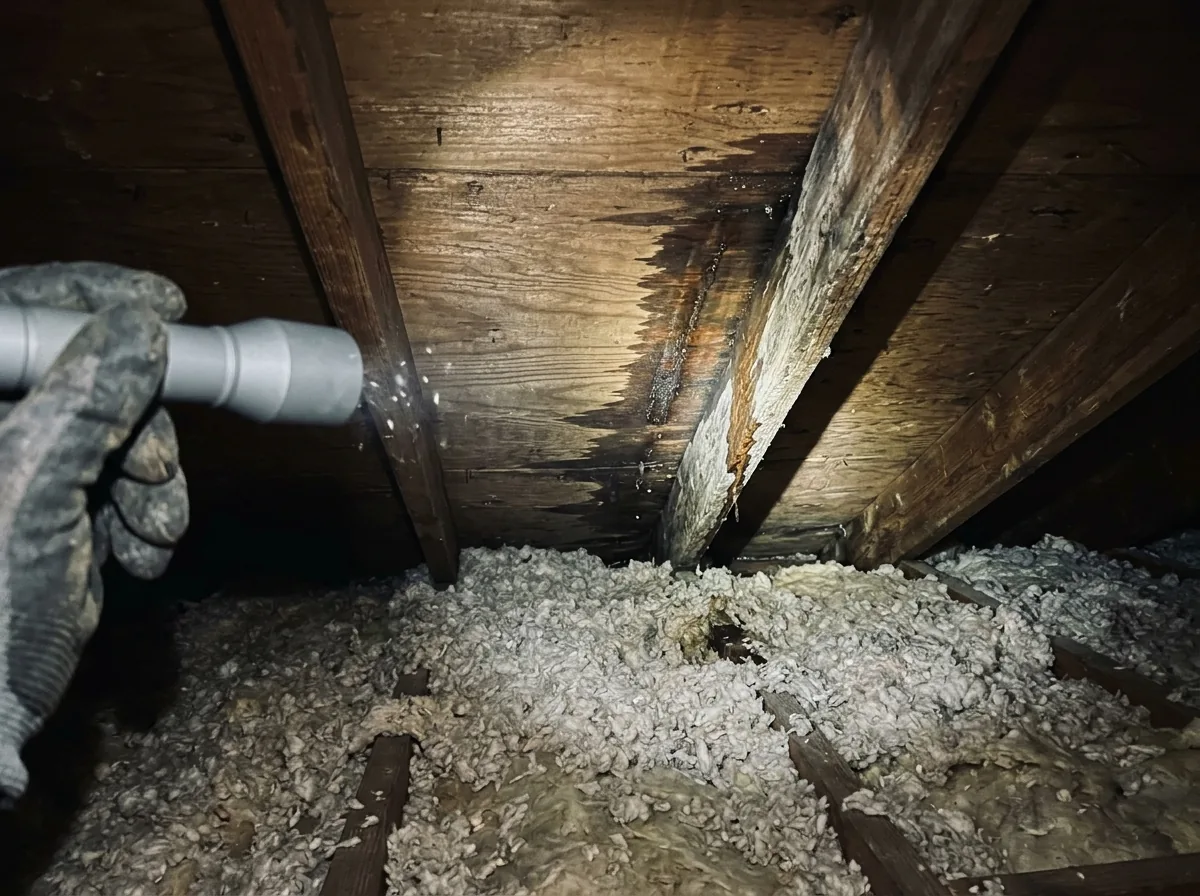
Water test and attic tracing
HomeGuide notes that the time spent finding a leak adds to the bill, so tracing is part of the price. In the attic, the roofer follows stains on the sheathing and rafters uphill from the ceiling spot. On the roof, they lift tiles along that line. If it's still unclear, a water test runs a hose on one section at a time, low on the roof first and moving up, while someone watches inside. It's slow work and worth paying for. A leak fixed in the wrong place comes back with the next storm.
Why Hesperia homeowners call Hesperia Tile Roofing
- Asking for a quote is free and you're under no obligation
- Each request goes to a single tile roofer, not sold to a list
- Ask that tear-off, felt, deck allowance and permit sit on one written price
- You never pay for the referral
Why Hesperia Tile Leaks Show Up in Winter
NOAA's 1991-2020 normals for the Hesperia station tell the story:
December to March
about 5.6 inches, roughly 71% of the year's 7.85 inchesJune and August
around a tenth of an inch eachFreezing nights
about 32 a year, mostly December to February
A tile that cracked in spring, or felt that split in August, can go unnoticed until the first real storm. By then water may have been reaching the deck in every shower, so a leak found in December is often older than it looks. A late-fall roof check before the wet months is cheaper than the ceiling repair.
Before You Sign for an Emergency Leak Repair
California gives homeowners three business days to cancel most home improvement contracts, five if you're 65 or older. The CSLB says a "service and repair" contract for an emergency you asked for on short notice is the exception: the right to cancel ends once you sign and work starts. That makes the written price matter more on a leak call than anywhere else. Get the repair, the hourly rate for tracing and any minimum charge in writing first. Check the roofer's license as set out on the tile roof repair page.