
Slate-Look Tile Roofing Types in Hesperia
"Faux slate" covers a lot of materials. HomeGuide lists asphalt, concrete, clay, metal and synthetic versions. These are the ones a tile roofer handles, and they differ more in weight and lifespan than in look.
Slate-Look Concrete Tile
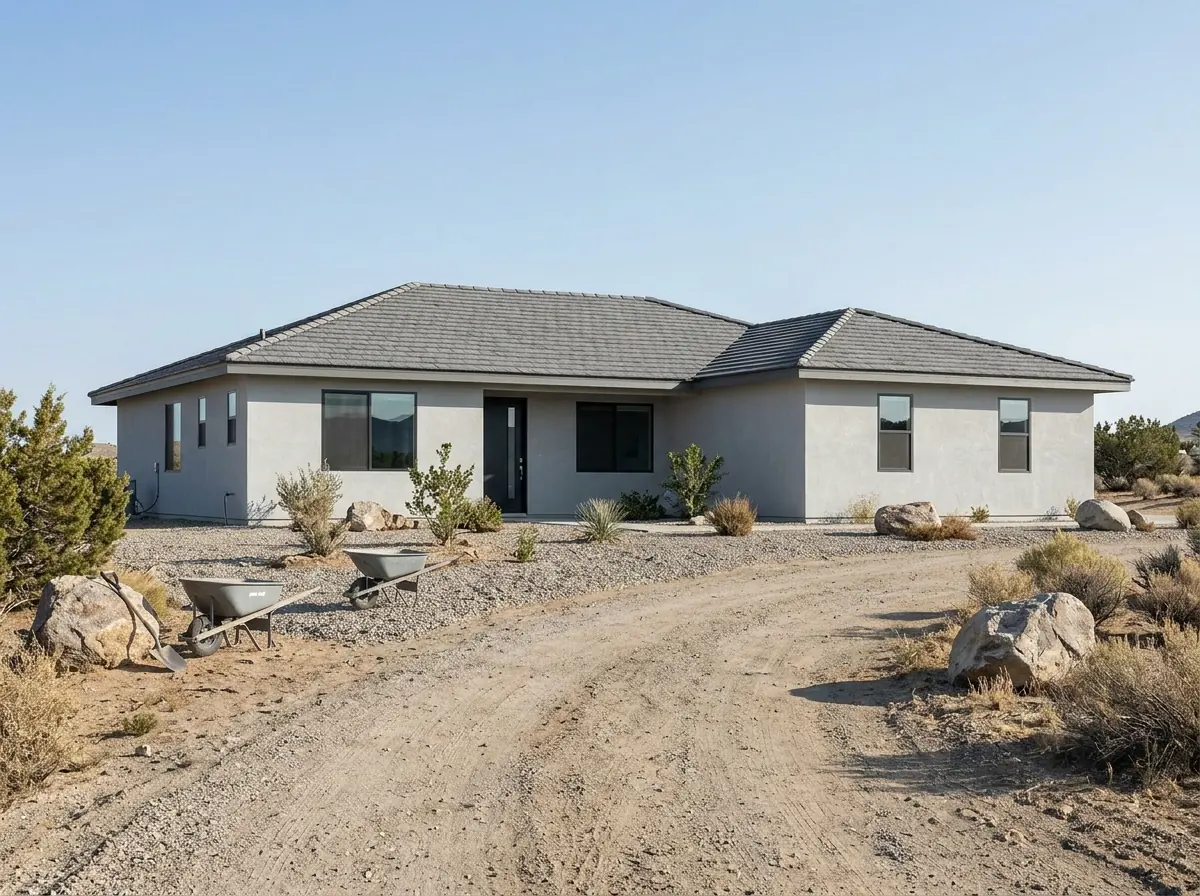
The most common route to a slate look on a tile roof is a flat concrete tile cast with a textured, slate-like face. It's still concrete tile: Class A when installed on a noncombustible deck, about 970 lb per 100 sq ft in standard weight, and roughly 88 tiles to a square. It also ages like concrete, so a dark slate color can lighten as the surface wears in its first decade. Choose dark grays with the cool-roof rule in mind: Hesperia's Title 24 requirements are explained on the concrete tile roofing page.
Synthetic (Composite) Slate
Synthetic slate is molded from plastic, polymer or rubber blends. It costs $9 to $12 a square foot installed, weighs little enough that HomeGuide says no extra bracing is needed, and lasts about 30 to 50 years. The same guide lists curling or cracking in harsh climates and fading in direct sun among its drawbacks. Hesperia averages about 108 days a year at 90°F or hotter, so ask the roofer which product has held up in heat like that. Check the product's fire rating. In a fire hazard zone, get the Class A listing in writing; fire-resistant tile roofing covers the zone rules.
Fiber-Cement Slate
Fiber-cement slates show up on some older roofs. InterNACHI notes fiber-cement tiles are seldom made now because of laws limiting asbestos in building products. If your roof has them, ask for the material to be identified before any piece is cut, drilled or torn off. Matching is also hard, since the original products are largely gone, so a damaged fiber-cement roof may need a new material rather than a patch.
Natural Slate (Rare, and What It Weighs)
Natural slate is quarried stone. Quarter-inch slate weighs about 935 lb per square, and half-inch about 18.7 lb per square foot, roughly double. The National Slate Association says a house that never had slate should have a licensed structural engineer check the framing first. HomeGuide puts soft slate at 50 to 125 years and hard slate at 75 to 200. Given that lifespan, repair before replacement is the sensible order on a natural slate roof. The weight check for any switch to a heavier roof is on the shingle-to-tile conversion page.
Repairing Slate-Look Courses and Edges
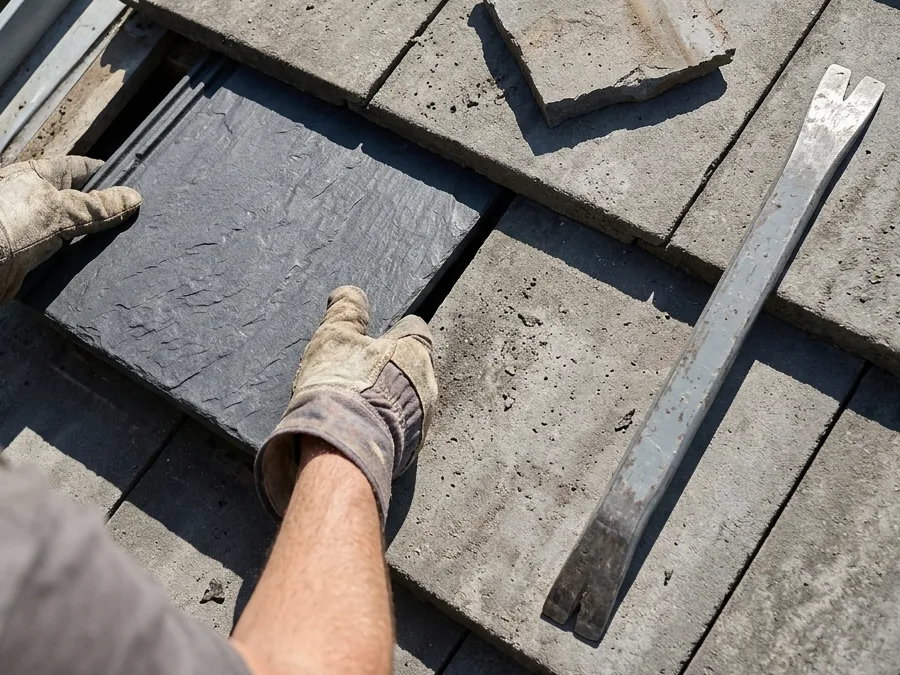
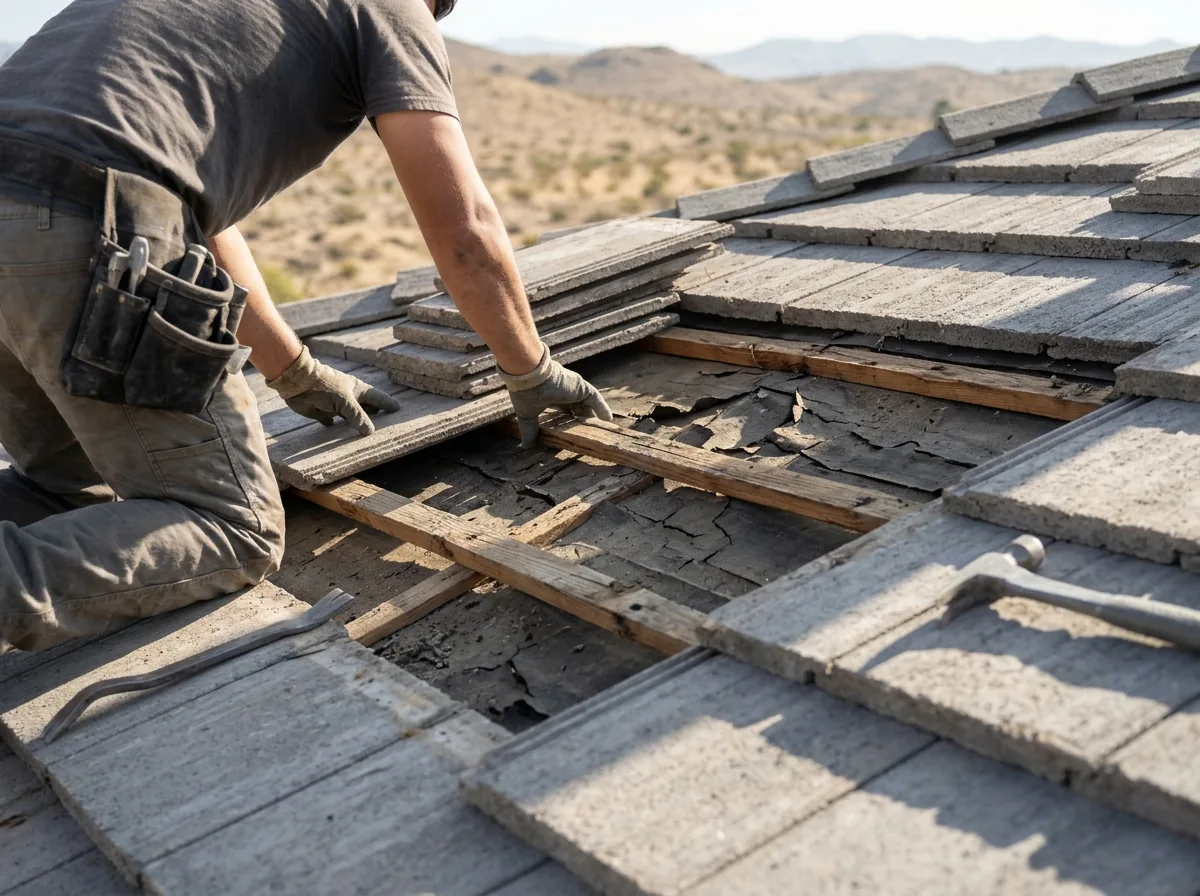
On slate-look concrete, damage collects where it does on any tile roof. InterNACHI finds loose and missing tiles most often along ridges, hips and rakes. Thin interlocking edges crack under foot traffic. A single broken tile is a $60 to $125 repair in HomeGuide's figures, if a match exists. Natural slate is harder: HomeGuide calls it difficult to match and expensive to repair. For an out-of-production slate color, see discontinued roof tile matching.
Why Hesperia homeowners call Hesperia Tile Roofing
- Asking for a quote is free and you're under no obligation
- Each request goes to a single tile roofer, not sold to a list
- Ask that tear-off, felt, deck allowance and permit sit on one written price
- You never pay for the referral
Slate-Look Options Compared
| Slate-look concrete | Synthetic slate | Natural slate | |
|---|---|---|---|
| Installed cost | $7 to $19 per sq ft | $9 to $12 per sq ft | $10 to $30 per sq ft |
| Weight per square | About 970 lb | Light; no bracing needed | About 935 lb (¼ in) and up |
| Typical life | 30 to 50+ years | 30 to 50 years | 50 to 200 years |
| Main watch-out | Color wear | Heat, curling, fading | Weight and matching |
For most Hesperia homes already built for concrete tile, slate-look concrete is the like-for-like choice. Synthetic slate earns a look when weight rules out tile.